The Belarusian Christmas Eve Supper: Kuttsia and the Lenten Dishes
On 24 December and again on 6 January, Belarusians sit down to kuttsia: a meatless supper of an odd number of Lenten dishes around a pot of grain, honey and poppy seed. The dishes, the rites, the link to Dziady, and a basic kuttsia recipe.
In this post
The Belarusian Christmas Eve supper is called kuttsia (куцця), after its central dish: whole grain cooked soft and eaten with honey and poppy seeds. It is a meatless family meal of an odd number of Lenten dishes, traditionally three to thirteen, eaten once the stars are out: on 24 December by Catholic Belarusians, and on 6 January by the Orthodox, whose church keeps the Julian calendar and celebrates Christmas on 7 January.
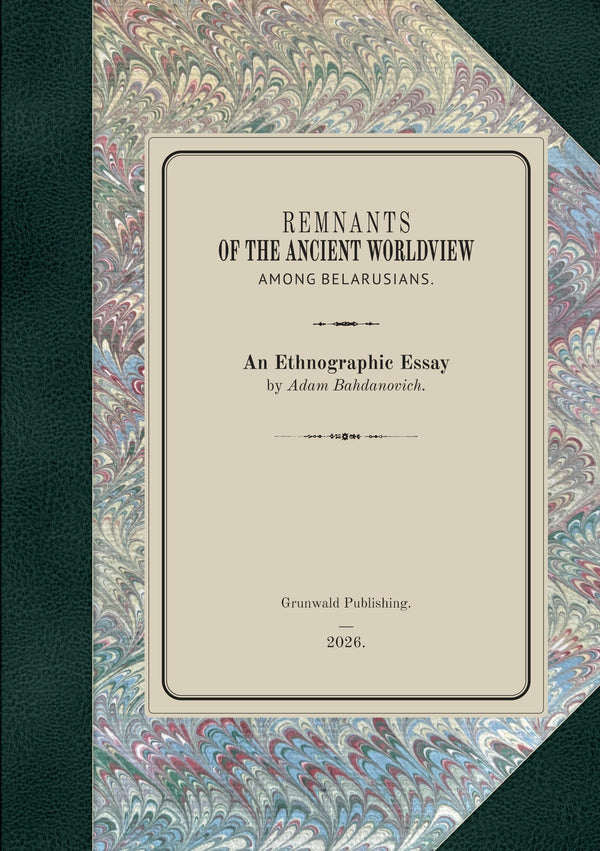
Kuttsia is the Belarusian relative of Ukrainian kutia (kutya) and Polish kutia, and it belongs on any list of traditional Belarusian dishes. This guide draws on the Holiday Menus chapter and the kuttsia recipes in The Belarusian Cookbook by Aliaksandr Biely, and on Adam Bahdanovich's 1895 account of the Christmas Eve rites in rural Belarus.
When is Christmas Eve in Belarus?
Twice. Belarus is mostly Orthodox, with a large Catholic minority, and both Christmas Days, 25 December and 7 January, are public holidays. The Catholic supper falls on 24 December. The Orthodox one falls on 6 January, which is 24 December in the Julian calendar, currently 13 days behind the Gregorian. Bahdanovich used Julian dates, so the "December 24" in his book is today's 6 January.
The three kuttsia evenings
Christmas Eve opens a season of kuttsia evenings. According to the cookbook, the suppers of Christmas Eve, New Year's Eve and Epiphany Eve were all called kuttsia, and by tradition they were cooked in the same pot with the same quantity of grain. Bahdanovich calls them the three kaliady (Каляды) and gives each its own character in Remnants:
| Evening | Name in 1895 | Catholic date | Orthodox date | On the table |
|---|---|---|---|---|
| Christmas Eve | The Lenten kaliada | 24 December | 6 January | Meatless, as many dishes as possible |
| New Year's Eve | The rich or "fat" kaliada, also shchedryk, the "generous" evening | 31 December | 13 January | Rich, fatty food |
| Epiphany Eve | The Epiphany or "hungry" kaliada | 5 January | 18 January | Lenten again, with fewer dishes |
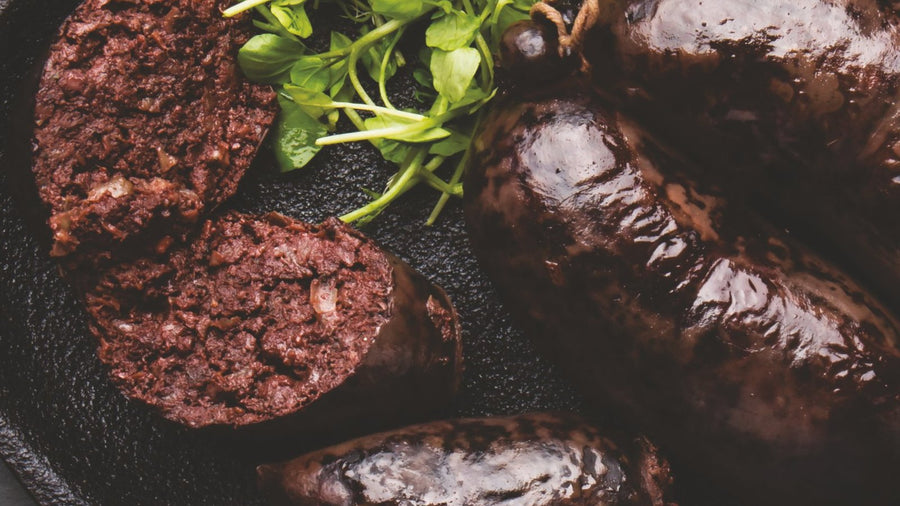
The rich evening is when the pig slaughtered for the holidays came into its own, from salt pork to the blood sausage in our guide to kishka.
What is kuttsia (kutia)?
The cookbook traces it to pagan times. Among most Slavic peoples it was a shared ceremonial meal of grain, poppy seeds and honey, "symbolizing goodwill and reconciliation". Its original name is lost; the Orthodox Church called it kuttsia, a word linguists usually derive from the Greek koukkia ("beans") or kokkos ("grain"). Catholics adopted it too, and it spread among all the Christian peoples of the Grand Duchy of Lithuania: Belarusians, Lithuanians and Poles. Lithuanians still call their Christmas Eve Kūčios.
The book gives two versions. Simple Kuttsia is plain barley or wheat, slow-cooked and baked, and served with honey water and poppy seed "milk". Aristocratic Kuttsia mixes the grain with ground poppy seeds, sugar, honey, raisins, hazelnuts, candied orange peel and sour cream, which makes it much closer to the sweet Ukrainian kutia in most English-language recipes. Noble families also served Almond Poliuka, a sweetened almond milk, alongside it.
What is served at a Belarusian Christmas Eve supper?
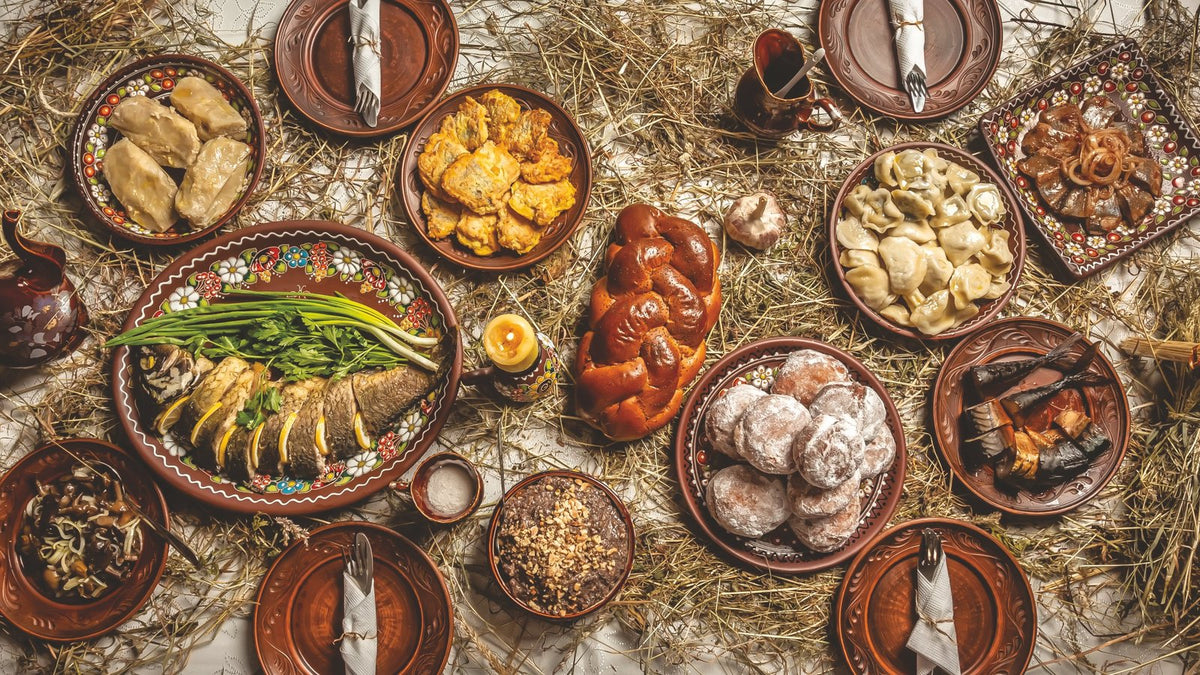
No meat. The cookbook lists the traditional dishes:
- kuttsia, with honey water (syta)
- lamantsy, poppy seed biscuits
- uzvar, a compote of dried fruit
- oatmeal kisiel
- herring and other fish, especially carp
- red borshch with vushki (little mushroom dumplings)
- sauerkraut
- mushroom poliuka (soup)
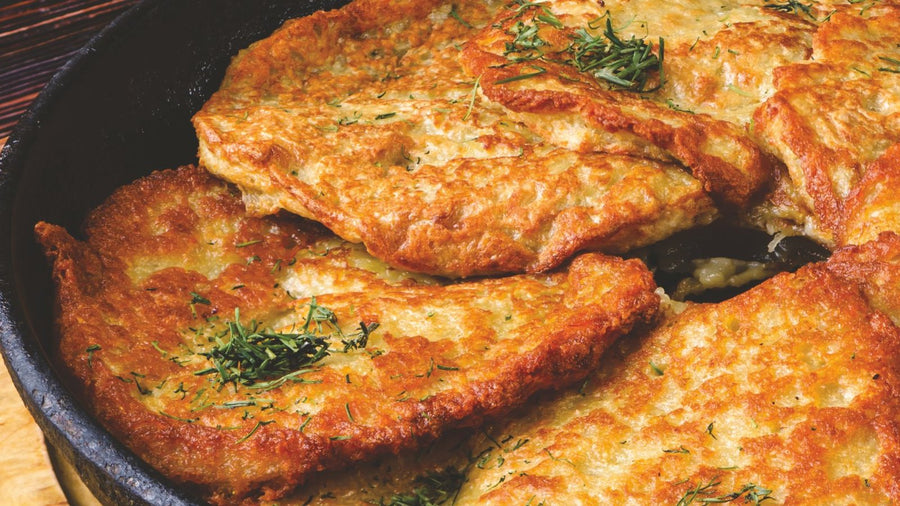
Wealthier households added almond poliuka, desserts, nuts, raisins, sweet wine and, from the 1830s, tea. Even the poorest families ate herring at Christmas; those who could not afford it dipped their bread in the brine. Bahdanovich's 1895 list adds fritters with honey or poppy seed, bliny, fried fish and dumplings: "as many dishes as possible, but on no account fewer than seven".
The book has recipes for several of these, including Stuffed Carp, mushroom Vushki, an oat-based Traditional Belarusian Kisiel and slizhyki biscuits soaked in poppy seed "milk". There are also the Vigil Knishes Fried in Oil that Catholic families in Lithuania and Belarus made for Christmas Eve. Its Kaliady menu covers the whole festival, so check each recipe before cooking for the eve itself. The gentry borshch, for example, is made with a meat and mushroom stock.
How the supper was served
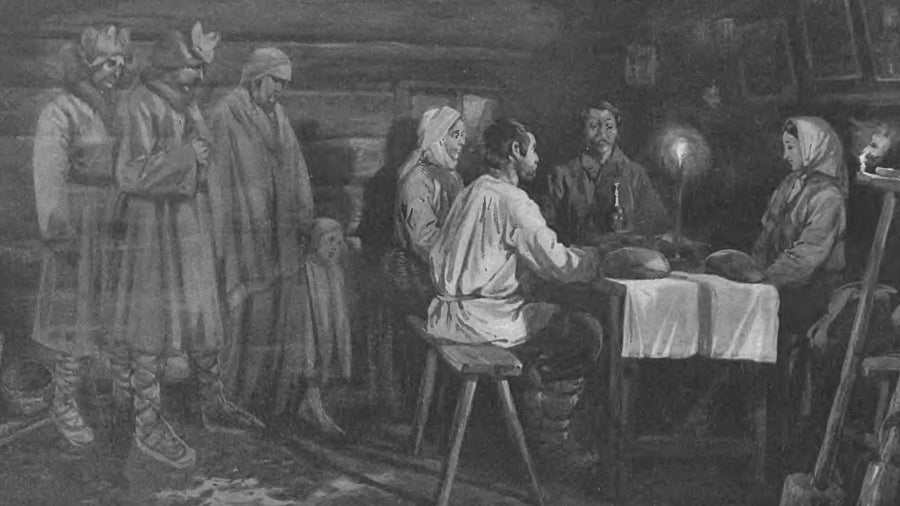
Bahdanovich describes the evening. When the stars appear and the house has been swept, hay is laid on the table under the cloth, bread and salt are set out, and then the kuttsia. Everyone prays. In the Babruysk district the master of the house then carries the kuttsia out and around the house and knocks three times at the window. Asked who is there, he answers:
"God himself is coming, bringing the kutiya." Remnants of the Ancient Worldview among Belarusians
Then the family eats from one bowl, in order of seniority, and no dish may be passed over. In other places, he notes, they invited the frost to come and eat kuttsia and asked it to spare the young crops. After supper came fortune-telling: stalks of hay pulled from under the cloth foretold long or short flax, and a sky thick with stars promised plenty of mushrooms and berries.
Kuttsia and Dziady: suppers shared with the ancestors
Kuttsia is also food for the dead. In Bahdanovich's Belarus it was an obligatory dish at every funeral meal and memorial table. At Dziady (Дзяды), the memorial suppers for the ancestors, the table was laid much as on Christmas Eve: a white cloth, bread and salt, the kuttsia, and the master of the house at the door, this time inviting the ancestors, the dziady, to eat with the family. Ethnologists in Poland and Belarus have long read the Christmas Eve supper, too, as at root a meal shared with the family's dead. In Bahdanovich's pages, the dish that ties the two together is kuttsia.
Wigilia, Kūčios and Orthodox Christmas
The Polish Wigilia (from the Latin vigilia, "vigil") is the same supper on 24 December. It is meatless and begins at the first star, with hay under the tablecloth, often twelve dishes, and the opłatek wafer shared before the meal; in eastern Poland, kutia is served too. Lithuanian Kūčios and the Ukrainian Holy Supper share the same grain, honey and poppy seed core. On the Orthodox side, the eve of 6 January ends the 40-day Nativity Fast and is kept strictly.
A basic kuttsia recipe
A simple home version of the sweet kuttsia most families make today. The Belarusian Cookbook gives two of its own: the plain, traditional Simple Kuttsia and the festive Aristocratic Kuttsia.
Ingredients
- 1 cup (about 200 g) wheat berries or pearl barley
- ½ cup (about 75 g) poppy seeds
- 3–4 tbsp honey, or to taste
- A handful of raisins and chopped walnuts or hazelnuts (optional)
- A pinch of salt
Method
- Rinse the grain and soak it overnight in plenty of cold water.
- Drain, cover with fresh water, add the salt and simmer until tender, about an hour (wheat berries can take longer). Drain and let cool.
- Pour boiling water over the poppy seeds, leave them for 30 minutes, drain, then grind or pound them until they turn milky.
- Thin the honey with a few spoonfuls of warm water and stir it into the grain with the poppy seeds, and the raisins and nuts if using.
- Serve at room temperature.
Serves 4 to 6.