The Dragon Hatched from a Rooster's Egg
How Belarusian villagers believed a rooster's egg could hatch a fiery, money-bringing serpent, and how Barszczewski turned the belief into the first tale of Nobleman Zavalnia, the story of Karpa's dragon.

In this post
In Belarusian folklore, an egg laid by a rooster could hatch a dragon: a fiery, winged serpent that flew out at night to fetch money for its master, and burned his house down if he angered it. In the 1890s villagers still said of any well-off peasant that the serpent brought him money. Western legend hatches the cockatrice, a monster that kills with a glance, from a cock's egg; the Belarusian serpent is a household creature, and a greedy one.
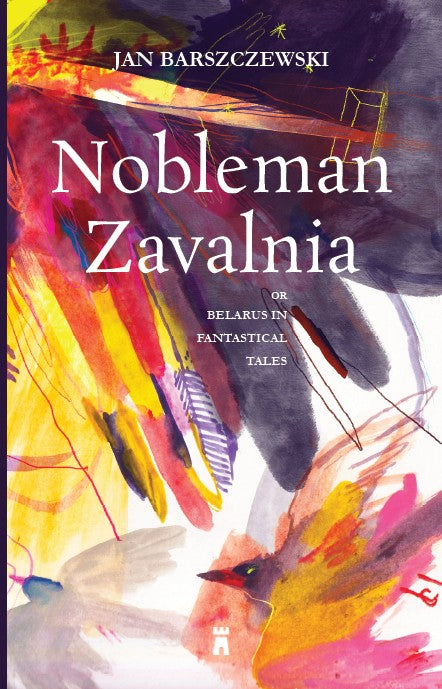
Jan Barszczewski opened his book of Belarusian tales, the illustrated Nobleman Zavalnia, with the story of a manor servant who raises such a dragon. For other spirits of the house and farmyard, see our field guide to Slavic folklore creatures.
How to hatch a dragon from a rooster's egg
The ethnographer Adam Bahdanovich recorded the recipe in Remnants of the Ancient Worldview among Belarusians (1895). If a black rooster lives for seven years, towards the end of its seventh year it lays a special egg, shaped like a snail's shell. The egg must be carried under the armpit for three years, and then a little serpent hatches.
It must be kept warm, fed on fried eggs and never irritated. Grown, it starts to fly, seeks out buried treasure and brings money to its master. It lives hidden in the storehouse and is brought fresh fried eggs every day, but never salted ones: "nothing angers the serpent so much as salt in its fried eggs." For that, it burns all the master's goods and flies away.
The Vitebsk version
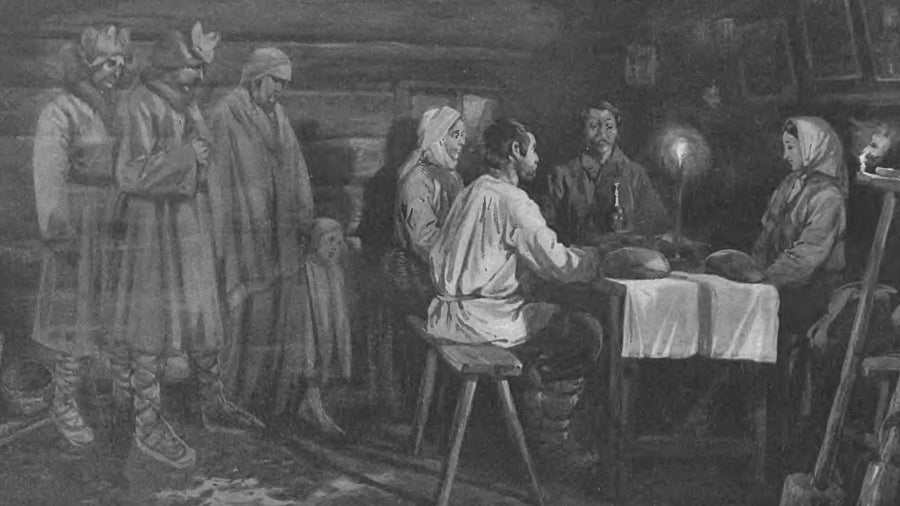
In Vitebsk province, Barszczewski's home country, the folklorist Nikolai Nikiforovsky recorded the same practice in 1897. Whoever hatches the egg under his armpit must give up washing, church, prayer and village gatherings while he carries it. The grown serpent comes home at dusk with money and goods, a fiery streak behind it. But if holy water, church incense or consecrated herbs reach its nook, it brings live coals and straw instead, and burns the house down. Envious neighbours, Nikiforovsky noted, used consecrated herbs for exactly that.
What does the fiery serpent look like?
Most of the people Bahdanovich asked described something like a grass snake, only much bigger, all golden, glowing like embers, and winged. Others likened it to a man who could fly. When villagers said the serpent had flown by, it was a bright meteor. Bahdanovich concluded it was a storehouse spirit born of two old objects of worship, fire and the grass snake that Belarusians kept as a household god: hence the fiery serpent.
Karpa's dragon: the first tale of Nobleman Zavalnia
In Barszczewski's book, travellers caught by blizzards on a frozen lake shelter at the manor of Pan (Mr.) Zavalnia and pay for supper with a tale. The first teller, a grey-haired peasant, swears his story is true.
When he was young, a stranger in black came to his cruel master, Pan K.G., spoke a language no one understood and taught the master to make gold. After a midnight rite in the cemetery the stranger vanished, and the master drove out his servant Karpa.
In time Karpa, lazy and godless, was given a house and land. He wanted Agapka, the beautiful daughter of a hardworking neighbour, Harasim, but her parents refused him. So Karpa asked the master to order the marriage. The master gave him a year to prove himself and show what he had earned.
Karpa went to Paramon, the most feared sorcerer in the district, ready to sell his soul to get rich. Paramon gave him seeds for a black rooster, which would lay an egg no bigger than a pigeon's. Karpa was to carry it under his left armpit for a month and feed the lizard that hatched on milk from his palm, until it grew wings and became a dragon. "If it comes in its black form, it will bring you rye, wheat, and other grains. If it arrives wreathed in flame, it will deliver gold and silver." But anger it, Paramon warned, and it would burn his house to the ground.
Karpa raised the dragon. One night the narrator saw it fly over, scattering sparks like hot iron under a blacksmith's hammer, and burst into pieces above Karpa's house. Within months Karpa was rich, and the master ordered the wedding.
At the wedding Paramon was given the place of honour. When a bagpiper and his friend mocked him, he bewitched them: one played and the other danced, unable to stop, until the piper fell senseless and the dancer was black in the face.
While Karpa was away, a handsome stranger with gold rings on every finger and a red sash appeared to Agapka and scattered gold on the floor. When she called on the Virgin Mary, he burst into flames and vanished. Word spread that the dragon itself was visiting her.
Agapka's mother brought her blessed herbs and church incense to burn every evening. The moment Agapka sprinkled the herbs on the embers, a gust struck the wall and light flashed through the house. Pots flew, and stones rained from the dark corners. The family escaped, but stones kept pouring from the house until the next evening, when the priest arrived with holy water. As he approached, the whole house burst into flames and collapsed.
Karpa disappeared. Weeks later a hunter found his body washed up on the lake shore, and he was buried there without prayer or priest. Agapka lived on for some years, sick with grief and fear, and then wasted away. Paramon died without the last rites, in a grave without a cross.
Folk belief and the tale, point by point
| Village belief (Bahdanovich, Nikiforovsky) | Karpa's dragon (Barszczewski) | |
|---|---|---|
| The egg | Laid by a black rooster in its seventh year, shaped like a snail shell | Laid by a black rooster fed a sorcerer's seeds, no bigger than a pigeon's |
| Hatching | Under the armpit; the hatcher gives up church, prayer and the village | Under the left armpit for a month, by a man with no God in his heart |
| Food | Fried eggs, never salted | Milk from the palm of the hand |
| What it brings | Treasure, money and goods | Grain in its black form, gold and silver when wreathed in flame |
| How it is seen | A golden, winged serpent glowing like embers; a meteor; a flying man | Sparks bursting over Karpa's house; a young man with gold rings and a red sash |
| What undoes it | Holy water, incense or blessed herbs in its nook: it burns the house | Blessed herbs and church incense, then holy water: the house burns |
Nearly every step of Karpa's story follows the Vitebsk recipe, even the price: to hatch the egg, a man had to cut himself off from church and village. Karpa had done that already. No peasant's daughter would have him, and at his own wedding he scorned village custom: he did not ride his horse through burning straw, and no wedding songs were sung.
What the dragon hides
What the folk record lacks is the frame Barszczewski built around it: a sorcerer from nowhere who teaches the lord to make gold, a cruel lord who disposes of his serfs at will, and a servant of the manor who grows rich through a bargain with the unholy. He wrote in Polish, in St Petersburg, under imperial censorship. The preface to our edition reads the book's sorcerers and dark guests as stand-ins for imperial agents, and its traitors as men who meet tragic ends. Karpa, who turns his back on his village and ends drowned and buried without a priest, fits the pattern.
The money-serpent flies again in "The White Magpie". On the night the White Magpie, a witch-lady who travels as a snow-white bird, first visits a greedy local lord and leaves him a sack of gold, watchmen see "a dragon flying northward, trailing sparks and flames, perhaps bearing gold for some soul that had sold itself to the devil". In Vitebsk belief the unholy live mainly in the north and the west, and north of Polatsk lay St Petersburg, the imperial capital. Who she was is a story of its own: the White Magpie's tale.
The sorcerer returns in "The Screaming Hair"
In "The Screaming Hair", Zavalnia recognises an old man in black as the sorcerer whose servant Karpa carried a rooster's egg under his shirt. This time the sorcerer persuades a husband to cut off his wife's braid. The cut hair writhes in water like leeches, and the husband is left with hair that screams on his own head.
Behind it lies the kaltun, the matted tangle of hair known to old medicine as plica polonica. In the Vitebsk beliefs Nikiforovsky collected, a kaltun must never be cut, and cut plica hairs come alive.