Folk Horror Books: 20 Eastern European Folk-Horror and Gothic Classics
What folk horror is, and 20 Eastern and Central European folk-horror and gothic classics to read, from Gogol, Mickiewicz and Erben to Karatkevich, Tokarczuk and Barszczewski's Belarusian werewolf.
In this post
Folk horror is horror that grows out of a place and what its people believe: a remote landscape, a close-knit community, old customs and rituals, and a threat that comes from the land itself or from the people who keep its traditions. The best folk horror books leave you with the feeling that the village knows something you don't. Eastern Europe was writing this kind of story long before anyone had a name for it.
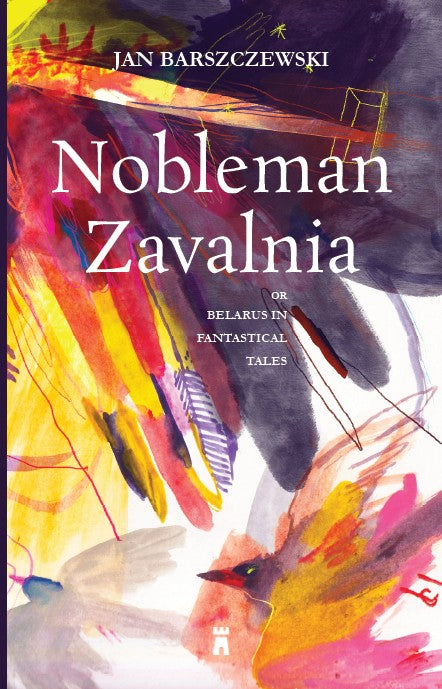
Below are 20 folk-horror and gothic classics rooted in the folklore of Eastern and Central Europe, from Gogol's Ukrainian devils to Polish forests, Czech water goblins and a Belarusian werewolf. All are available in English, from many publishers. One of them is ours: Jan Barszczewski's Nobleman Zavalnia, a cycle of Belarusian tales of witches, sorcerers and restless souls from the 1840s, now out as a full-colour illustrated hardcover of Nobleman Zavalnia with pictures by Nasta Lee.
What is folk horror?
The phrase turned up in a film magazine as early as 1970, but it was Mark Gatiss's 2010 BBC series A History of Horror that made it popular. It stuck to three British films, Witchfinder General (1968), The Blood on Satan's Claw (1971) and The Wicker Man (1973), which the critic Adam Scovell called folk horror's "unholy trinity". In his book Folk Horror: Hours Dreadful and Things Strange (2017), Scovell describes a chain of four links: a landscape that shapes the people in it, isolation, skewed beliefs and morality, and finally a "happening" or summoning, often violent.
In 19th-century Eastern Europe the beliefs were not invented for the story. Writers took them from the villages they grew up in, often in the same decades that ethnographers were recording them: witches who steal milk, werewolves, the dead who come home for supper, treasure guarded by evil spirits. For the creatures themselves, see our Belarusian field guide to Slavic folklore creatures.
Folk horror, folk gothic or fairy tale?
Often all three. Gothic brings the ruined chapels and cursed families; fairy tales supply the plots: the witch, the bargain, the three nights. "Folk gothic" is a useful name for the 19th-century gothic short stories in between. What makes a book folk horror is that a community's belief drives the dread. Where a book below is more fairy tale than horror, we say so.
Folk gothic: the 19th-century classics
1. The Manuscript Found in Saragossa by Jan Potocki (1805–1815)
A Polish count wrote this enormous frame tale in French. A young officer, Alphonse van Worden, crosses Spain's Sierra Morena and hears stories nested inside stories over sixty-six days: two mysterious Moorish sisters, a gallows under which he keeps waking up, a possessed man. The setting is Spanish, but it is the great ancestor of the Eastern European frame tale. Wojciech Has filmed it in 1965.
2. Forefathers' Eve (Dziady), Part II, by Adam Mickiewicz (1823)
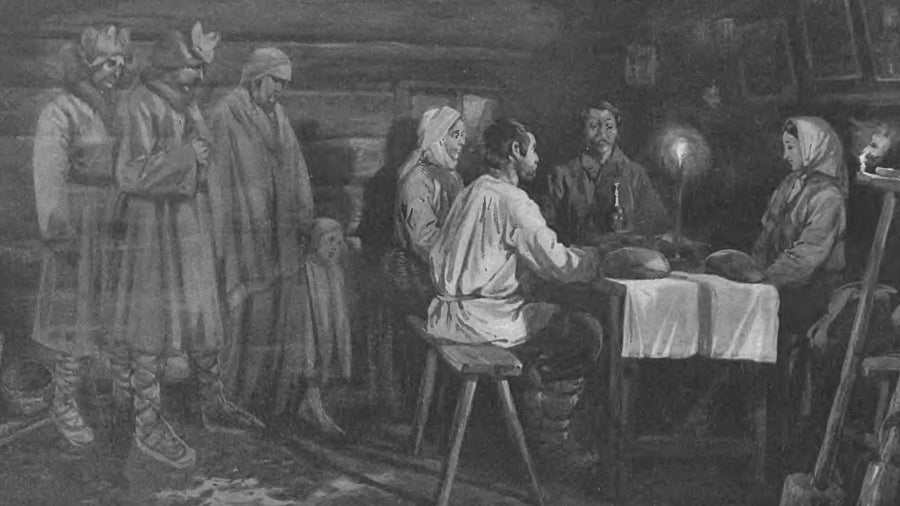
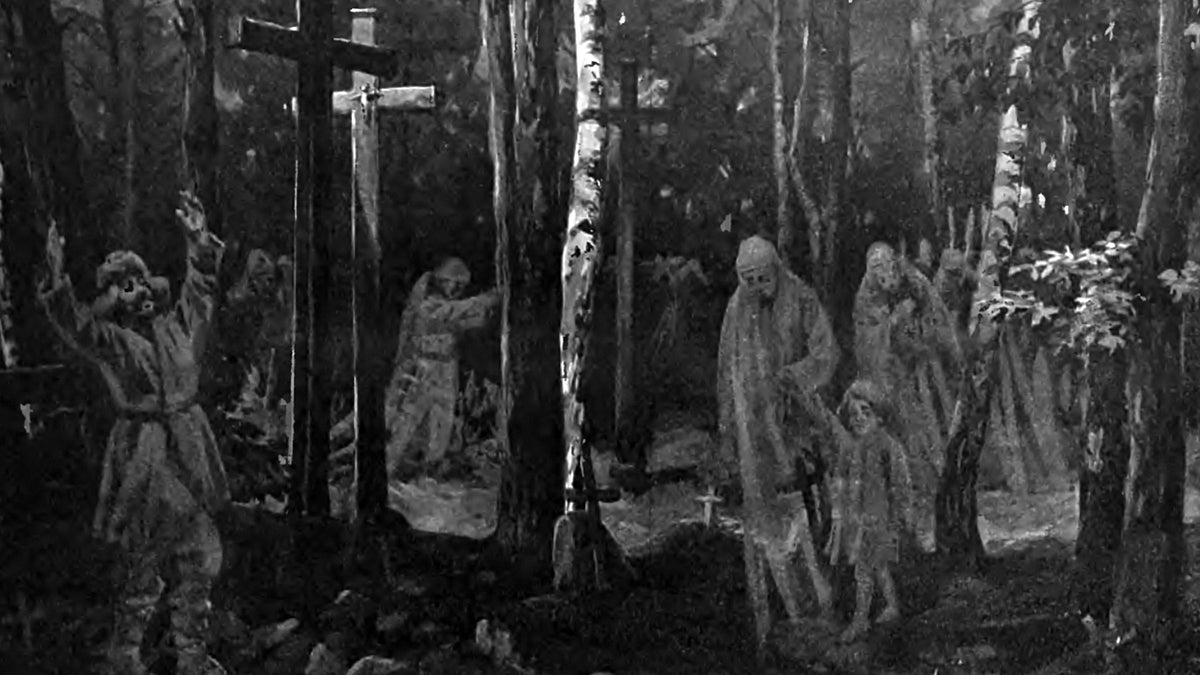
At night, in a chapel, villagers call up the souls of the dead so that they can be helped towards heaven: two children who never suffered and so cannot enter, a cruel lord pursued by birds who will not let him eat, a shepherdess who never loved anyone. Mickiewicz grew up in Navahrudak, now in Belarus, and built the drama on the autumn rite of Dziady (Дзяды); read about it in Dziady: When the Dead Come Home to Supper. It is in English as Forefathers' Eve, translated by Charles S. Kraszewski. His earlier Ballads and Romances (1822) include a water maiden of Lake Svitsiaz and a ballad about the sorcerer Twardowski and his wife; Twardowski turns up in Zavalnia too.
3. Evenings on a Farm Near Dikanka by Nikolai Gogol (1831–32)
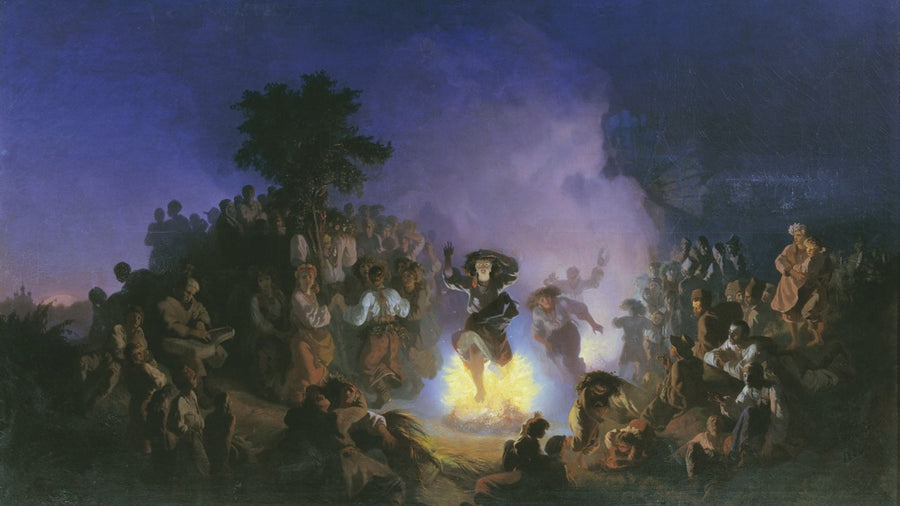
Gogol's first book: eight Ukrainian village tales of witches, devils, drowned maidens and cursed gold, introduced by a beekeeper called Rudy Panko. Horror and comedy sit side by side. In "Christmas Eve" a devil steals the moon; in "St John's Eve" a young man digs up treasure on Kupala night at a terrible price. We compare it tale by tale with Barszczewski in If You Loved Gogol's Dikanka, Read Barszczewski.
4. "Viy" by Nikolai Gogol (1835)
The darkest thing Gogol wrote, from his collection Mirgorod. Khoma Brut, a Kyiv philosophy student, is ridden through the night by an old woman, beats her, and watches her die as a beautiful young girl. Her father, a Cossack chief, makes him pray over her body in a village church for three nights. On the third she summons Viy, whose eyelids hang to the ground. Gogol claimed Viy came from folk legend; most scholars think he invented him.
5. The Family of the Vourdalak by Aleksey K. Tolstoy (written 1839)
A French diplomat lodges with a Serbian peasant family. Old Gorcha has gone out after a bandit, warning his family that if he returns after ten days they must not let him in. He comes back just as the time runs out. Tolstoy wrote it in French; it was first published, in Russian translation, only in 1884. Mario Bava filmed it with Boris Karloff in Black Sabbath (1963).
6. Nobleman Zavalnia, or Belarus in Fantastical Tales by Jan Barszczewski (1844–46)
The 19th-century Belarusian classic on this list (Шляхціц Завальня; Polish original Szlachcic Zawalnia), and the one most English readers have never heard of. Barszczewski grew up near Polatsk and published the book in Polish, in four volumes, in St Petersburg. In the frame story Pan Zavalnia, a country nobleman on the shore of Lake Nieszczarda, takes in travellers lost in a blizzard on one condition: "one of you must tell me an interesting tale." His nephew Janka, Barszczewski's stand-in, sits and listens.
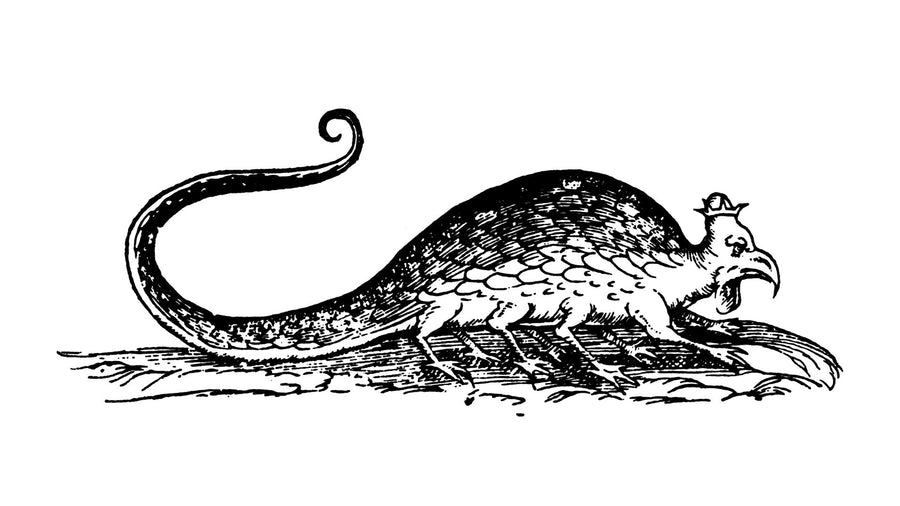
The tales are as close to folk horror as anything written in the 1840s. A manor servant hatches a fiery dragon from a black rooster's egg to win a bride, and his house ends under a hail of stones and then in flames. A witch who steals her neighbours' milk is shot at in the shape of a magpie and is found limping the next day. A huntsman kneels before the Serpent King on Elk Mountain to take his golden crown. A jilted young man drinks enchanted harelka at his sweetheart's wedding and turns into a wolf (ваўкалак, vaukalak):
"I wandered through mountains and forests in the form of a terrifying beast, but with the mind and heart of a man."
Elsewhere the Weeping Woman haunts ruined chapels and old battlefields while treasure-hunters dig up chained skeletons and wake an iron-clad giant. A guest in black keeps returning to ruin landowners. The White Magpie, a beautiful sorceress, wins over the local gentry with gold and toasts, and blight, milk theft and werewolves follow. Underneath runs a real-world horror Barszczewski never questioned: serfdom, in which a master could order who married whom.
The book is also political. As the preface to our edition explains, Barszczewski wrote in Polish, the language of the educated elite, at a time when writing about Belarus in Belarusian risked suppression, and his sorcerers and dark guests can be read as stand-ins for imperial power. This is its first complete translation into English. We follow two of those readings in The White Magpie and The Werewolf of Zavalnia.
7. "Bezhin Meadow" by Ivan Turgenev (1852)
A lost hunter spends the night by the fire with five peasant boys who are guarding the horses, and listens as they swap stories: a house spirit heard at night in a paper mill, a wood demon, water spirits, a drowned man's ghost. Nothing supernatural happens, which makes it worse; Turgenev adds that one of the boys died that year. It is in A Sportsman's Sketches.
8. Kytice (A Bouquet) by Karel Jaromír Erben (1853)
Czech ballads built on folk legends: the Noon Witch who comes for a crying child, the Water Goblin who keeps the souls of the drowned under upturned pots, and a dead lover who returns to fetch his bride in "The Wedding Shirts". Dvořák turned four of them into symphonic poems. In English as A Bouquet of Czech Folktales (Marcela Sulak) and Kytice (Susan Reynolds).
Eastern Europe through outsiders' eyes
9. "Lokis" by Prosper Mérimée (1869)
A pastor and amateur ethnographer, Professor Wittembach, visits a manor in Samogitia, in western Lithuania, to work on a Samogitian translation of the Gospel. His host, Count Szémioth, was born after his mother was attacked by a bear, and the household is afraid of what he may be. Lokys is Lithuanian for "bear". A werewolf story without a wolf.
10. Carmilla by Sheridan Le Fanu (1871–72)
The vampire novella that came a quarter-century before Dracula. Laura lives with her father in a lonely castle in Styria, now in Austria, until a carriage accident leaves a mysterious girl in their care. The Irish author drew on Central European vampire lore.
11. Dracula by Bram Stoker (1897)
It is on every list, and it belongs here only partly. Stoker never went to Transylvania and built it largely from books, among them Emily Gerard's essay "Transylvanian Superstitions" (1885), which gave him the word nosferatu. Read it for Jonathan Harker's journey into the Carpathians.
Twentieth-century folk horror
12. Shadows of Forgotten Ancestors by Mykhailo Kotsiubynsky (1911–12)
A Ukrainian novella of the Hutsul Carpathians. Ivan and Marichka, children of feuding families, fall in love; she drowns, and the mountains around him fill with spirits: the forest maiden mavka, the forest lord chuhaister and a molfar, the Hutsul sorcerer. Marco Carynnyk translated it for the Canadian Institute of Ukrainian Studies (1981), and Sergei Parajanov's film of it is a classic.
13. King Stakh's Wild Hunt by Uladzimir Karatkevich (1964)
The great Belarusian gothic novel. On a rainy autumn night in 1888 a young folklorist, Andrei Belaretsky, takes shelter at Marsh Firs, the crumbling house of the Yanovsky family deep in the Belarusian marshes. The last heir, Nadzeya, lives under a two-hundred-year-old curse: a phantom hunt that rides down her family. Belarusian in language, setting and sensibility, it was filmed in 1979 and is in English in Mary Mintz's translation (Glagoslav). See where it fits in our guide to Belarusian literature in English.
Modern folk horror novels, and books like The Witcher
14. The Last Wish by Andrzej Sapkowski (1993)
If you came looking for books like The Witcher, start with the Witcher himself. These linked stories (in English since 2007, translated by Danusia Stok) rework fairy tales such as Beauty and the Beast and Snow White. In "The Witcher", Geralt must lift the curse on a king's daughter turned striga, a monster that leaves its tomb at night, which is Polish folk horror at its purest.
15. Baba Yaga Laid an Egg by Dubravka Ugrešić (English 2009)
Written for Canongate's Myths series and translated by Ellen Elias-Bursać, Celia Hawkesworth and Mark Thompson, this finds Baba Yaga in old women today: the author's ageing mother, three elderly friends at a Czech spa, and a mock-scholarly guide to the witch by an invented folklorist. A funny, sharp reminder that the witch of Slavic fairy tales was always about growing old.
16. Drive Your Plow Over the Bones of the Dead by Olga Tokarczuk (2009)
Janina Duszejko, a retired teacher who looks after summer houses in a village near the Czech border, is convinced the animals are taking revenge when the local hunters start dying. Antonia Lloyd-Jones's translation (2018) was shortlisted for the International Booker Prize, and Agnieszka Holland filmed it as Spoor. A Nobel laureate's folk noir, with all four links of the folk horror chain.
17. Deathless by Catherynne M. Valente (2011)
The Russian tale of Koschei the Deathless and Marya Morevna, moved to St Petersburg and Leningrad through the Revolution and the Second World War. Baba Yaga is here too.
18. Uprooted by Naomi Novik (2015)
Built on the Polish fairy tales Novik grew up with. Every ten years the wizard called the Dragon takes a girl from the valley, and this time it is Agnieszka. The real monster is the Wood, a corrupting forest at the valley's edge. More fantasy than horror, but the Wood is frightening. It won the Nebula Award.
19. The Bear and the Nightingale by Katherine Arden (2017)
In medieval Russia, Vasya can see the household and forest spirits her family still feeds, the domovoi among them. When a new priest frightens the village away from the old offerings, the spirits weaken and something worse wakes. The first of the Winternight trilogy.
20. Spinning Silver by Naomi Novik (2018)
A Rumpelstiltskin retelling set in a wintry Eastern European kingdom, Lithvas. Miryem, a Jewish moneylender's daughter, boasts she can turn silver into gold, and the Staryk, fae lords of the winter, take her at her word. Less horror than Uprooted, but its winter is cold enough.
The real beliefs behind the stories
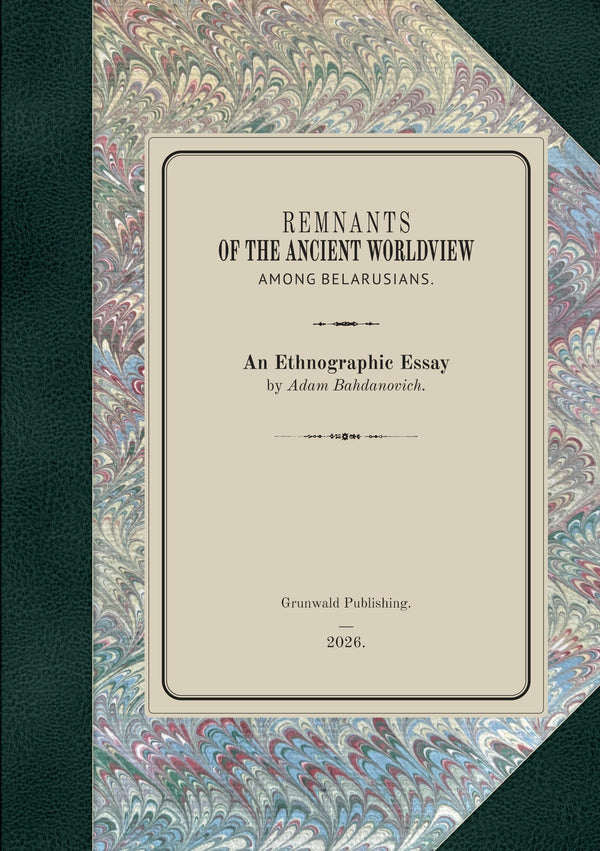
Barszczewski did not invent his creatures. Half a century later, Adam Bahdanovich recorded the same beliefs among Belarusian peasants in his ethnographic essay Remnants of the Ancient Worldview among Belarusians (1895), now in English for the first time, translated from the Russian and edited by Olya Ianovskaia. He describes the snake king with a crown of golden horns, who will shake one off onto a tablecloth spread before him; the money-bearing serpent hatched from a black rooster's egg carried under the armpit; and the zalom (залом), a knot twisted in standing rye, which he ranks as the most dangerous kind of sorcery. On witches he is brief:
"The witch can also turn into a magpie or a black cat."
Read side by side, the ethnographer gives you the belief, and the storyteller gives you the night it came true.