Draniki: Belarusian Potato Pancakes (and How to Serve Them with Machanka)
A basic Belarusian draniki recipe, the four kinds of draniki in The Belarusian Cookbook, and how to serve them: with sour cream, salt pork or a pot of machanka.
In this post
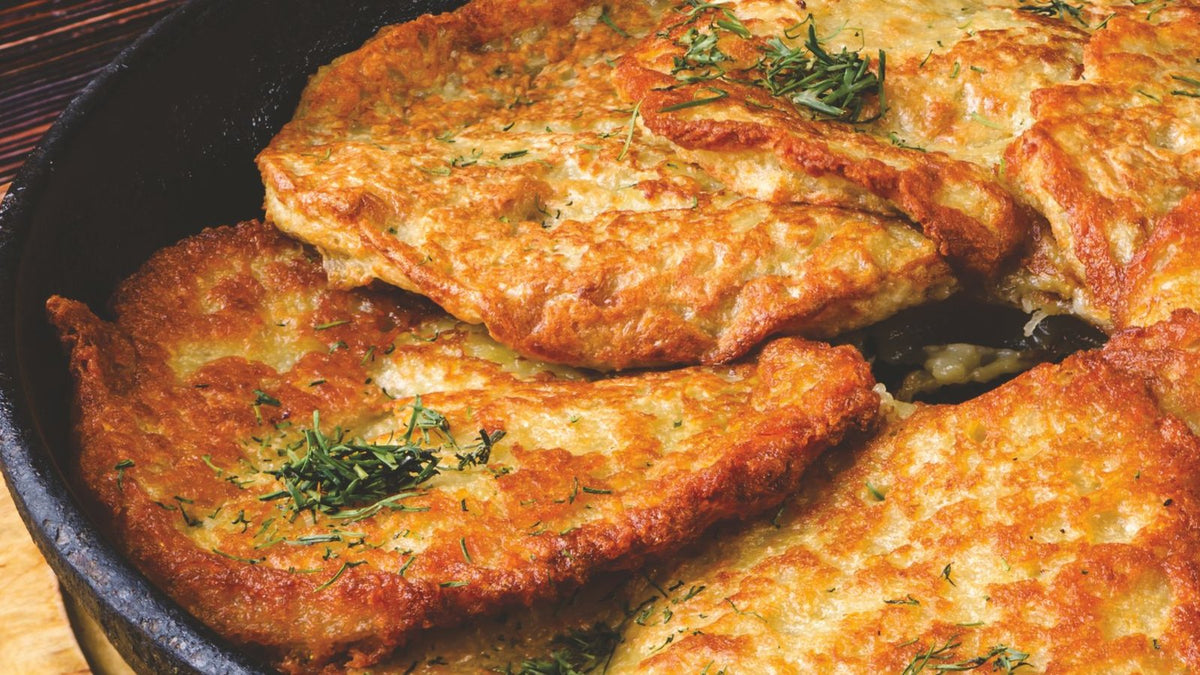
Draniki (дранікі) are Belarusian potato pancakes: finely grated raw potato, usually with onion, fried in hot oil until crisp and golden and eaten straight from the pan with sour cream. They are the dish most often named as the national dish of Belarus. Ukrainians make a close cousin called deruny, and Ashkenazi Jews know them as potato latkes.
Below is a basic home recipe to start with. For the full versions, see the draniki recipes in The Belarusian Cookbook by Aliaksandr Biely, which gives four kinds. For the rest of the Belarusian table, from kalduny to kuttsia, see our guide to Belarusian food: 25 traditional dishes and the stories behind them.
What are draniki?
The name comes from the Belarusian verb drats (драць), "to tear" or "to grate", which is exactly what you do to the potatoes. Biely calls draniki relatives of hash browns and Irish boxty and says nearly every family has its own recipe. Many people top them with sour cream or crispy salt pork cracklings, but "purists typically enjoy them plain — fresh, hot, and straight from the frying pan".
They are younger than they seem. Potatoes reached Belarus with German colonists in the mid-18th century, and according to the book, draniki entered Belarusian cooking only in the early 1900s, even though most Belarusians are sure they go back centuries.
A basic draniki recipe
A simple home version to get you started. Like the classic draniki in The Belarusian Cookbook, it uses no egg or flour: the potatoes' own starch holds the pancakes together. A little onion adds sweetness and, the book notes, helps stop the grated potato from darkening.
Ingredients
- About 1 kg (2 lb) floury potatoes, such as russets
- 1 onion
- Salt and black pepper
- Vegetable oil, for frying
- Sour cream, to serve
Method
- Peel the potatoes and onion and grate them finely into a sieve set over a bowl.
- Let the liquid drain for a few minutes, then press out as much as you can. Pour the liquid away, but keep the white starch that settles at the bottom of the bowl.
- Mix the potato and onion back into the starch and season with salt and pepper.
- Heat a good layer of oil in a frying pan over medium-high heat. Drop in spoonfuls of the mixture and flatten them into small pancakes.
- Fry until deep golden and crisp on both sides, and serve straight from the pan with sour cream.
Serves about 4. Keep finished batches warm in a low oven while the rest fry, as the book does for its stuffed draniki.
Four draniki from The Belarusian Cookbook
Classic draniki
Grated potato and plenty of onion, bound only by the potatoes' own starch and fried until crisp.
Simple draniki
Grated potato, salt and an optional spoonful of flour: the base for countless family variations. The book serves them with salt pork fried with onions, marinated cranberries or sour cream.
Stuffed draniki
Here egg and flour bind the potato, which is shaped into flat ovals. A spoonful of filling goes between two ovals, the edges are sealed, and the draniki are fried with diced salt pork. The book gives four fillings: mushroom, meat, fish and egg. Meat is the most popular.
Harodnia draniki
A very different dish from the Harodnia countryside, adapted from Janina Tsikhanyuk of Bryndzishki. Sour cream, egg yolks and whipped egg whites go into the grated potato, and the batter is fried in wide layers slightly thicker than a crepe. The soft pancakes are stacked high, eaten without a knife and served with pamochka, melted butter or fat poured over the top.
How to serve draniki with machanka
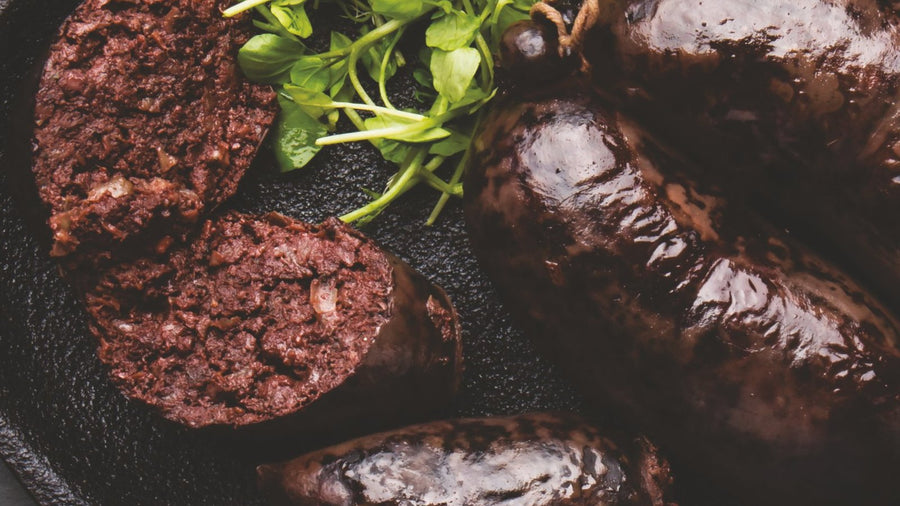
In Belarus, the classic partner for draniki is machanka (мачанка), also called vierashchaka (верашчака): a thick pork-and-onion gravy for dipping pancakes into. Machanka simply means "dip". The book traces the dish to an 18th-century royal chef named Wereszczaka, who boiled sausage in beer and served it with a spicy gravy. There is more of the story in our guide to Belarusian food.
The cookbook has four versions. Two are meant for draniki:
- Peasant vierashchaka: salt pork, onions and celery simmered in bread kvass or flat beer, thickened with browned flour and finished briefly in the oven. Serve it with draniki or bliny, as peasant households did.
- Chef's vierashchaka: veal sausages poached in beer, cut into pieces and simmered in a sweet-sour gravy of browned onion, flour, sugar and vinegar. The book describes it as probably the original version, created by an 18th-century royal chef, and it too is traditionally eaten with draniki or bliny.
The other two stew pork in beet kvass, from the 19th-century Lithuanian Cook, or in bread kvass with onions. Whichever you make, put the pot in the middle of the table and dip the hot draniki into it.
What goes well with potato pancakes?
- Sour cream (smiatana), the book's default for draniki.
- Salt pork and onions, fried together, or crisp cracklings.
- Machanka, for a full meal.
- Marinated cranberries, for a sweet-sour note.
- Cottage cheese dip with garlic and fresh herbs, which the book suggests as a topping for draniki.
- Mushroom sauce, which the book recommends with pancakes and boiled potatoes.
- Applesauce, the North American habit borrowed from latkes, which are often served with applesauce or sour cream. None of the book's draniki recipes call for it, but nothing stops you.
Draniki, deruny and latkes: what's the difference?
Mostly the name and the table they are served at. Deruny is the Ukrainian name, from the verb derty, "to grate". Latkes are the Ashkenazi Jewish version, fried in oil for Hanukkah. Much of central and eastern Europe has its own grated potato pancake, from Polish placki ziemniaczane to German Kartoffelpuffer.
The Jewish and Belarusian versions are especially close. Biely writes that "the famous bulba latkes — potato pancakes beloved by Eastern European Jews — have a Belarusian name". Both words point east. In Yiddish, bulbe means potato, like Belarusian bulba (бульба). Latke comes from the East Slavic word for a small fritter, which lives on in Belarusian as aladki; the book notes that latkes share a root with aladki. Even the onion in the book's classic draniki makes them, in Biely's words, "reminiscent of Jewish-style potato pancakes".
The practical difference is the binding. Many latke recipes add egg and flour or matzo meal, while classic draniki use only potato starch. The line is blurry, though: the book's stuffed draniki use egg and flour too. And where latkes often come with applesauce, draniki come with sour cream or machanka.