Kishka Explained: Belarusian Blood Sausage, Potato Kishka and Jewish Kishke
Kishka is the Belarusian word for “gut” and the sausage stuffed into it: first a blood sausage with buckwheat, then a 19th-century potato kishka. How both differ from Jewish kishke, with a basic potato kishka recipe.
In this post
Kishka (кішка) is the Belarusian word for "gut", and the name of the sausage stuffed into one. The original kishka is a blood sausage of pig's blood, buckwheat or barley and fried salt pork; since the 19th century Belarusians have also made a bloodless potato kishka, while the Jewish deli kishke (stuffed derma) is a cousin with the same name and a filling of flour or matzo meal and fat.
Kishka belongs to a wider village tradition, set out in our guide to Belarusian food and its traditional dishes. The Belarusian side of the story here comes from the kishka recipes in The Belarusian Cookbook by Aliaksandr Biely, which covers the sausage and gives it a place in the story of the Christmas pig.
What is kishka made of?
Belarusian cooks make two kinds, both in natural casings.
Blood kishka: kryvianka or kashanka
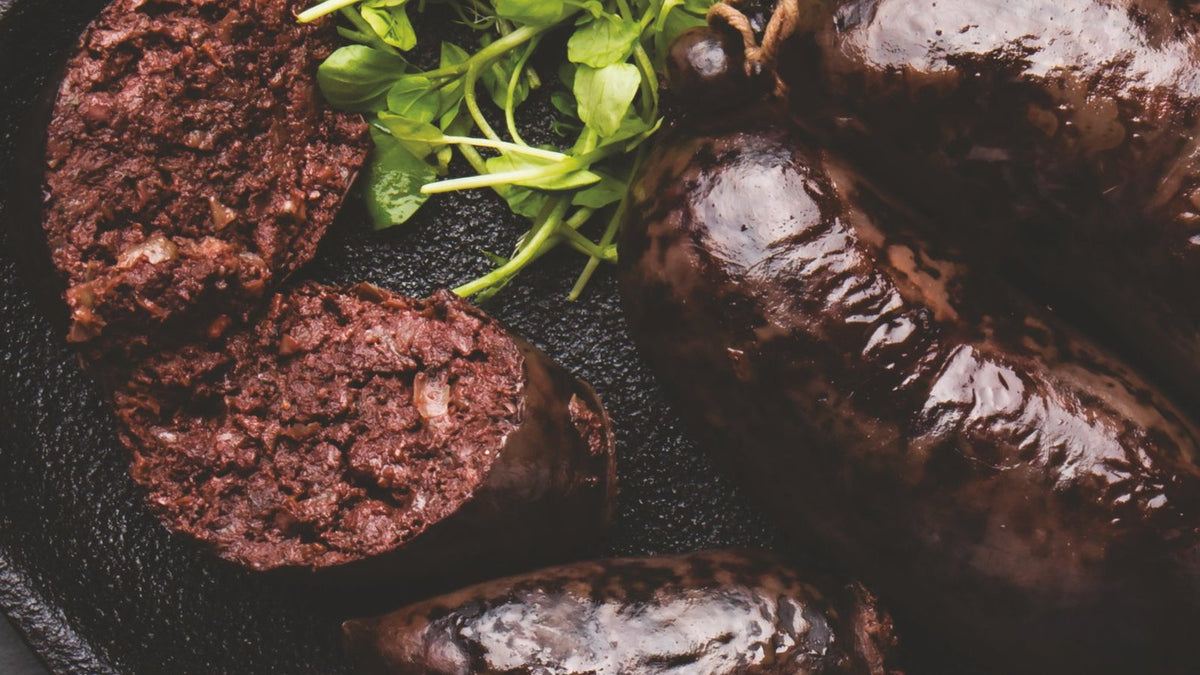
The older kind is called kryvianka (крывянка), from the word for blood, or kashanka, from kasha. The cookbook compares it to English black pudding. It starts with cereal, raw or boiled: buckwheat most often, but also barley or rice. This is mixed with sautéed salt pork, spices, sometimes liver, and pig's blood (in the past, also goose blood). The mixture is stuffed into pork casings and either baked, or steamed in hot water at 185°F (85°C) for two hours and then finished in the oven or on a grill. It belongs to the same family as Polish kaszanka.
Potato kishka: kartoflianaya kryvianka
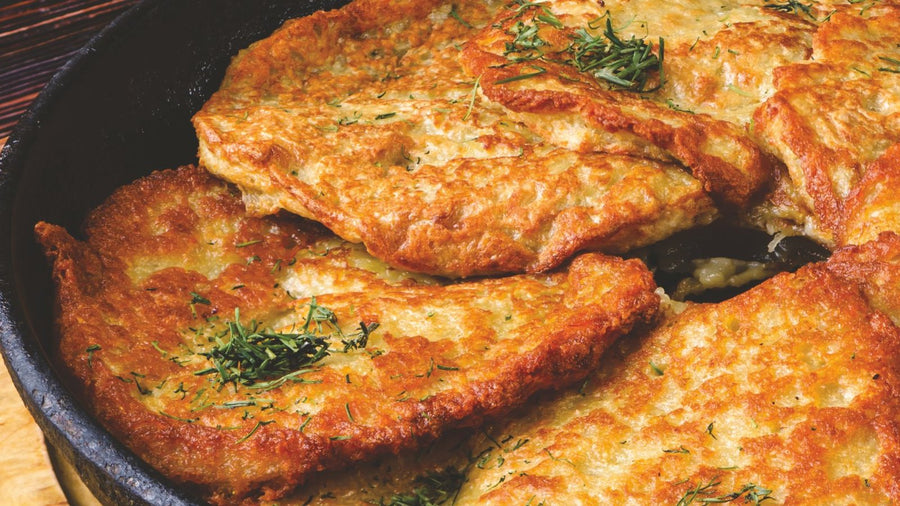
The second kind appeared in the 19th century. It leaves out the blood and replaces the grain with grated raw potato, flavoured with fried ham or pork belly, onion and marjoram. The book explains why in its introduction: potatoes reached Belarusian kitchens only in the mid-18th century, and the first potato dishes were modelled on older grain dishes, kishka among them. If you have made draniki, you already know the technique.
Potato kishka is still loved in Belarus and its borderlands, especially in Supraśl, near Białystok in north-eastern Poland, which holds a world championship in baking potato kishka and potato babka every year. Lithuanians know a close relative as vėdarai.
| Blood kishka (kryvianka) | Potato kishka | Jewish kishke (stuffed derma) | |
|---|---|---|---|
| Filling | Buckwheat, barley or rice; salt pork; spices; sometimes liver | Grated raw potato; ham or pork belly; onion; marjoram | Flour or matzo meal; fat (traditionally schmaltz); onion; spices |
| Blood | Yes, pig's blood | No | No |
| Casing | Pork | Pork or beef | Beef; today often synthetic, or none |
| Cooking | Baked, or steamed and then baked or grilled | Baked | Cooked in cholent, or baked |
Where does the name kishka come from?
In Belarusian and Polish the word simply means gut or intestine, and Yiddish borrowed it from its Slavic neighbours as kishke. The cookbook passes on a livelier story. "Kishka" is said to have been the nickname of an ancestor of the Kiszka family, one of the most influential Protestant noble houses of the 16th-century Grand Duchy of Lithuania, a man supposedly very fond of the sausage. It makes good table talk, though the word for gut is much older than the family.
Kishka and the Christmas pig
For most Belarusian peasants meat was a feast-day food, and the household pig, "a peasant's treasury", was slaughtered shortly before Christmas. Nothing was wasted. The book lists salted sala, cuts smoked over juniper, kvashanina (meat jelly) from the head and feet, a rustic "shoved-with-a-finger" sausage, and the blood for kishka, black pudding with kasha.
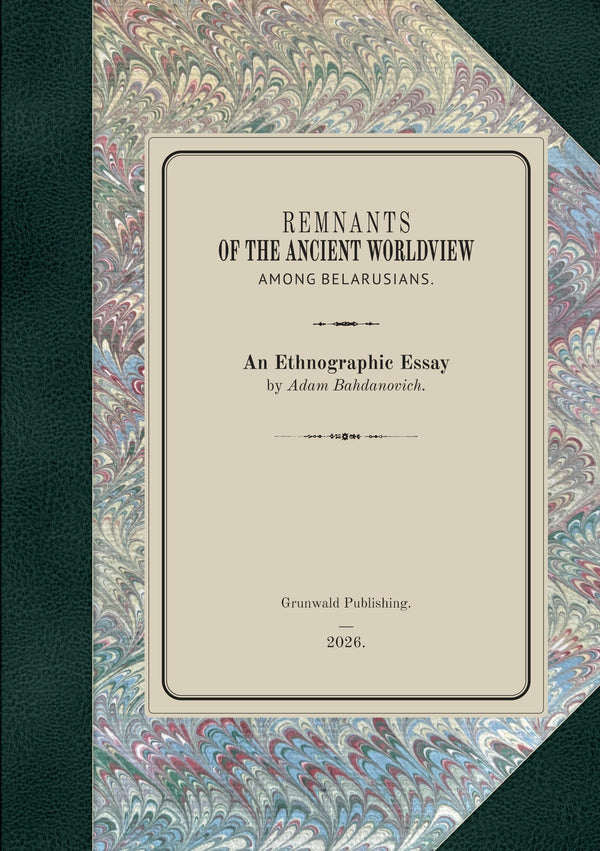
Adam Bahdanovich, describing central Belarus in 1895, shows how much the holiday depended on that pig. Belarusians called the season's pork foods, the sausages, salt pork and hams, kaliada, the same word as the festival itself, and as he puts it:
"There are no Kaliady without sausage and a fatty vereshchaka." Remnants of the Ancient Worldview among Belarusians
In his villages the blood was mixed with flour and baked into bliny (pancakes), and cutting up the carcass was itself a way of divining next year's harvest (Remnants). None of this reached the table on Christmas Eve, which was strictly meatless (see the Belarusian Christmas Eve supper and its kuttsia). The pork belonged to the feast days after it.
Is kishka the same as Jewish kishke?
Not quite. Kishke, or stuffed derma ("derma" comes from the German and Yiddish word for gut), is the Ashkenazi Jewish version: a beef casing filled with flour or matzo meal, fat (traditionally schmaltz, rendered chicken fat), onion and spices. It contains no blood and no pork, both forbidden under kosher law. It was classically laid on top of the Sabbath cholent and cooked overnight in the same pot. Today it is more often baked, sometimes as a log wrapped in foil with no casing at all, and served in slices, often with gravy.
The two dishes grew up side by side. The cookbook credits Jewish innkeepers with bringing potato dishes such as babka, a cousin of kugel, to Belarusian tables in the 19th century. Its Vilnius-style potato kishka comes with a kosher variation that uses smoked turkey or sautéed chicken breast instead of pork belly. That is the nearest thing in the book to a kosher kishka, but it is still a potato sausage. For the flour-and-schmaltz deli kishke, use a recipe written for it.
How to cook kishka
- Blood kishka: bake it, or steam the filled links in water at 185°F (85°C) for two hours and then brown them in the oven or on the grill.
- Potato kishka: fill the casings only two-thirds full, prick the links so they don't burst, and bake on a hot, greased tray, turning often. The larger Vilnius-style links bake low and slow, 50 minutes a side at 300°F (150°C), until crisp outside and tender inside.
- To serve: hot, with sour cream or a buttermilk dip. The book also puts potato kishka on its Easter menu.
A basic potato kishka recipe
A simple home version. For Biely's own potato kishka, and a larger Vilnius-style one with a kosher variation, see the book.
Ingredients
- About 1 kg (2 lb) potatoes
- 150–200 g (about 6 oz) smoked bacon or ham, diced
- 1 large onion, chopped
- 1 tsp dried marjoram
- Salt and black pepper
- 1 egg (optional)
- Natural pork casings, soaked and rinsed, or a greased loaf pan
Method
- Fry the bacon or ham with the onion until golden.
- Peel and finely grate the potatoes and squeeze out some of their liquid. Mix in the bacon and onion with their fat, the marjoram, salt, pepper and the egg, if using.
- Fill the casings loosely, about two-thirds full, tie the ends and prick each sausage a few times.
- Bake on a greased tray at 180°C (350°F), turning now and then, until browned and crisp, about 45 minutes to an hour.
- Serve hot with sour cream.
No casings? Bake the mixture in the loaf pan instead and slice it. The result is close to potato babka, kishka's cousin from the same 19th-century potato kitchen.