If You Loved Gogol's Dikanka, Read Barszczewski
Gogol's Evenings on a Farm Near Dikanka and Barszczewski's Nobleman Zavalnia are two 19th-century frame tales of village witches and devils. Here is how they compare, tale by tale, and where to start.
In this post
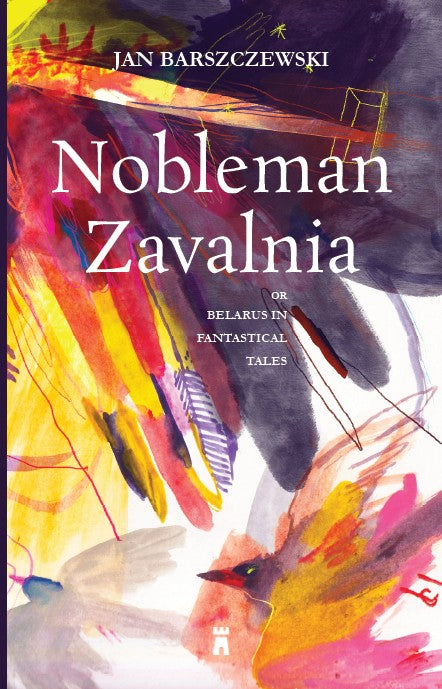
Evenings on a Farm Near Dikanka is Nikolai Gogol's first book: eight tales of witches, devils, drowned maidens and cursed treasure in the Ukrainian countryside, published in two volumes in 1831 and 1832 and presented by a beekeeper called Rudy Panko. If you loved it, the closest book you probably haven't read is its northern neighbour, Jan Barszczewski's Nobleman Zavalnia, or Belarus in Fantastical Tales (1844–46). It is another circle of storytellers and another countryside full of sorcerers, but Belarusian, and much darker.
Both belong to the 19th-century folk gothic in our list of 20 Eastern European folk horror books. Zavalnia is now in English in full for the first time, and the edition to start with is the illustrated hardcover of Nobleman Zavalnia, with colour pictures by Nasta Lee.
What is Evenings on a Farm Near Dikanka?
Gogol, a young Ukrainian newly arrived in St Petersburg, wrote the stories in Russian between 1829 and 1832, filling them with the countryside of his childhood near Poltava and asking his mother to send him details of customs, dress and superstitions. The book made his name. Its eight stories are:
- Volume 1 (1831): "The Fair at Sorochyntsi", "St John's Eve", "May Night, or the Drowned Maiden" and "The Lost Letter".
- Volume 2 (1832): "Christmas Eve", "A Terrible Vengeance", "Ivan Fyodorovich Shponka and His Aunt" and "A Bewitched Place".
Titles vary between translations ("Christmas Eve" is often "The Night Before Christmas"). Of Gogol's other books, Dikanka readers usually go next to Mirgorod (1835), with "Viy" and the first Taras Bulba, then to "The Nose", "The Overcoat" and the novel Dead Souls (1842).
What about Gogol's "Viy"?
"Viy" is the Gogol short story most people mean by Gogol horror. Khoma Brut, a Kyiv student, kills a witch who has ridden him through the night and is made to pray over her body in a church for three nights, until she summons Viy, whose eyelids hang to the ground. Gogol claimed Viy came from folk legend; most scholars think he invented him.
Two evenings of storytelling: Rudy Panko and Pan Zavalnia
Both books are frame tales. Gogol's Panko is a chatty beekeeper who talks to the reader like a guest at his table and hands some of the stories to his neighbours, notably Foma Grigorievich, the sexton of the Dikanka church. Barszczewski's host is Pan Zavalnia, a country nobleman in the north of Belarus, near Polatsk, who cannot fall asleep without a story. When a blizzard leaves travellers lost on the frozen lake and they find their way to his gate, he makes them an offer:
"Well then, you'll have supper and hay for your horses, but only on one condition: one of you must tell me an interesting tale."
The listener is his nephew Janka, a former pupil of the Jesuits whose learned retellings of the Odyssey only baffle the household. The preface to our edition reads Janka as Barszczewski's younger self. The tellers are peasants, a coachman, a blind wanderer, an organist and neighbouring gentry, and several of them insist that what they are telling is true.
What the two books share: witches, devils and Kupala night
Much of the common ground is shared belief rather than borrowing. Where to look in Zavalnia if you liked a particular Gogol story:
| If you liked this in Gogol | Read this in Zavalnia | What they share |
|---|---|---|
| "St John's Eve": Petro takes the fern flower on Kupala night and digs up gold that costs a child's life | "A Sorcerer and the Dragon Hatched from a Rooster's Egg" (Tale I), and the Kupalle night in the opening sketch | Devil's wealth bought to win a bride, ending in fire and ruin |
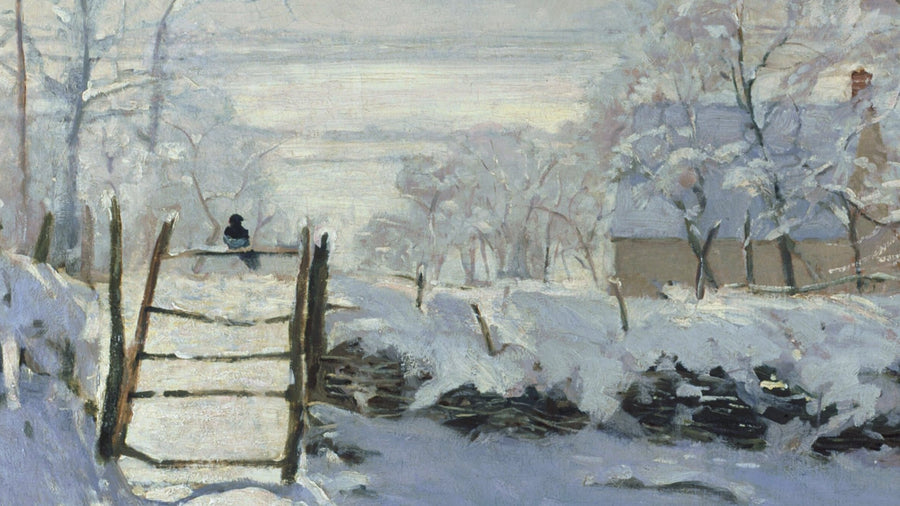
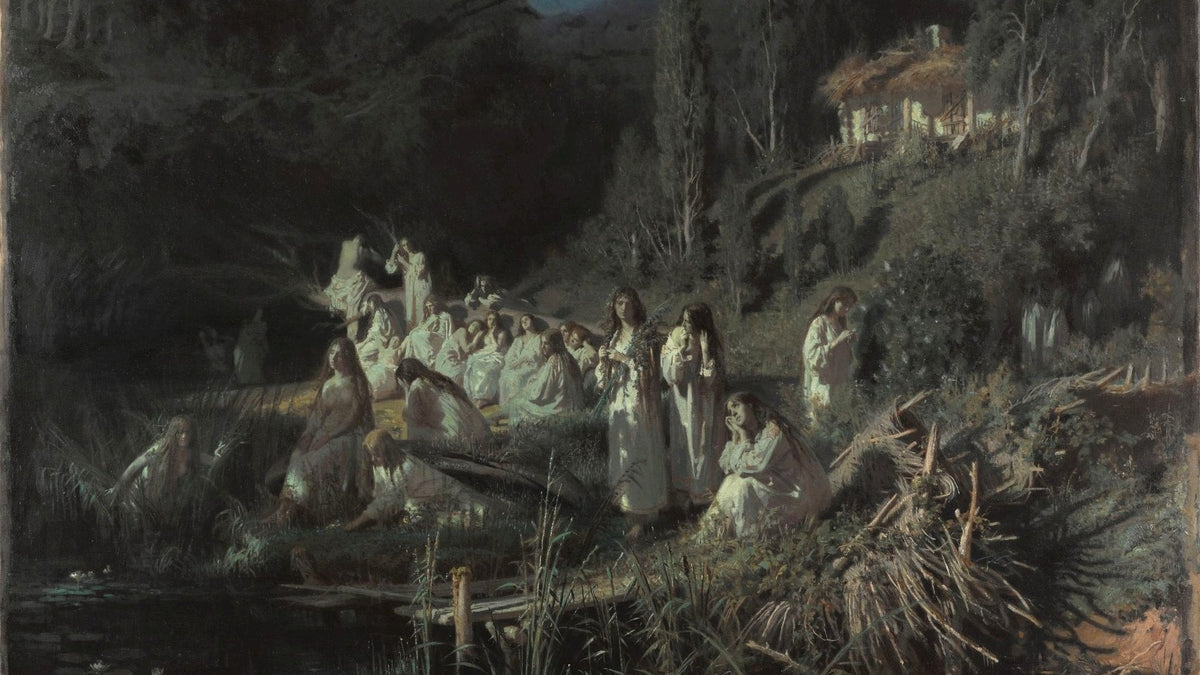
| "May Night": the witch stepmother is wounded as a cat and turns up with a bandaged hand | "Daring Deeds" (Tale II): a witch is shot at as a magpie and is limping the next day | The witch given away by a wound to her animal form |
| "Christmas Eve": a witch, a devil in a sack and a flight to St Petersburg | "Christmas Eve": a quiet supper of kuttsia on a hay-strewn table | The holy evening, as farce and as an exile's memory |
| "A Terrible Vengeance": a sorcerer father, a curse down the generations | "The Weeping Woman" (Tale VI): chained skeletons and a dead hero's armour | History that will not stay buried |
| "Viy": a student, a witch and three nights in a church | "Twardowski and His Pupil": a schoolboy opens a sorcerer's book and a demon answers | Students who meet what their lessons left out |
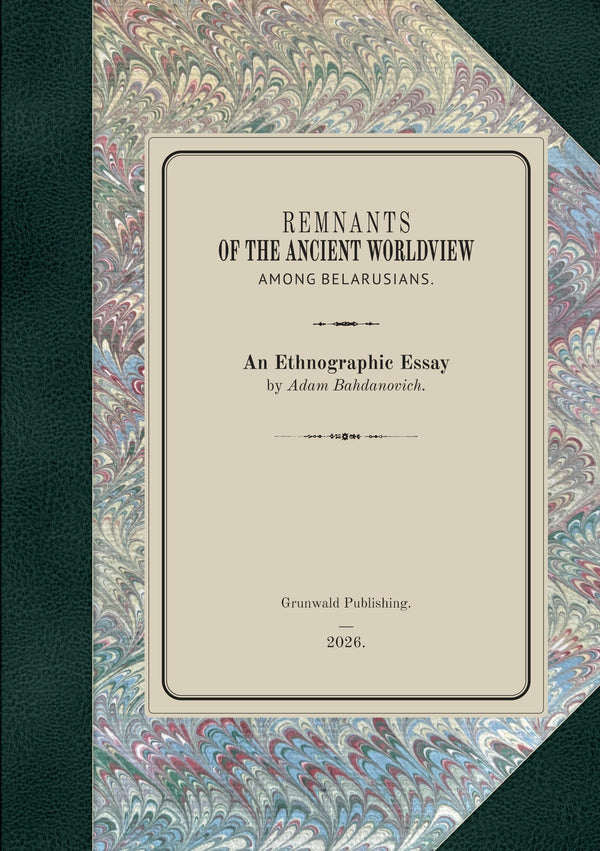
The Belarusian versions of these beliefs were written down half a century later by Adam Bahdanovich in Remnants of the Ancient Worldview among Belarusians (1895): the fern that blooms for a single instant on Kupalle (Купалле) night and shows where treasure lies, and the serpent hatched from a black rooster's egg that brings its master money and burns him if angered. Witches are a story of their own; see our Belarusian field guide to Slavic folklore creatures.
Ukrainian gothic, Belarusian gothic: humour versus dread
The biggest difference is tone. Gogol plays his devils for laughs. One steals the moon and ends up in a sack; the smith Vakula rides another to St Petersburg and comes home with the Tsaritsa's own slippers. Even the frightening stories come with a wink.
Barszczewski almost never winks. His tales end in drowning, fire, madness, or a man who walks out into the night and is never seen again. When the blind storyteller Francisak warns the company that he remembers only sad stories, a neighbour answers: "In our land, everyone is sad."
The Devil and the guest in black
Gogol's devils are a small, comic figure with a tail who courts the witch Solokha, and Basavriuk, the stranger in "St John's Eve" whom the village takes for the Devil in human form. Barszczewski's is quieter and worse: a pale stranger in black, with a nose like a bird of prey's beak, who teaches a landowner to make gold in Tale I and later hounds a ruined landowner to his death as a shadow on the wall. Pan Zavalnia notices the pattern himself: "As for the guest in black, who gave his master no peace — this is already his third appearance in our tales."
That repetition is a clue. Mikola Khaustovich, who translated the book into Belarusian, called it an encrypted allegory, and the preface to our edition reads Barszczewski's sorcerers and dark guests as stand-ins for the agents of empire. Two of those readings are traced in The White Magpie and The Weeping Woman.
Two writers in one imperial capital
Gogol and Barszczewski lived in St Petersburg in the same years. Gogol, born near Poltava in 1809, arrived in 1828, met Pushkin in 1831 and left Russia in 1836 after the uproar over his play The Government Inspector. Barszczewski, educated at the Jesuit school in Polatsk, worked in the capital as a teacher and writer from the 1820s, met Adam Mickiewicz and Taras Shevchenko there, edited the Polish-language almanac Niezabudka, and dated the foreword to Zavalnia in Petersburg in September 1844. We have found no record that the two men met, though Mickiewicz knew them both: Gogol spent time with him in Paris in 1836–37.
Their positions were very different. Gogol wrote in Russian, the language of the empire, and his Tsaritsa hands a village smith her slippers. Barszczewski wrote in Polish, the language of the educated elite; the preface to our edition notes that writing about Belarus in Belarusian risked suppression. His countryside is a land after a fall: serfs married off on a master's order, a ghost who gives alms in coins stamped with the Pahonia, the emblem of the vanished Grand Duchy of Lithuania, and the Weeping Woman, whom Khaustovich read as Belarus itself.
Where to start with Zavalnia
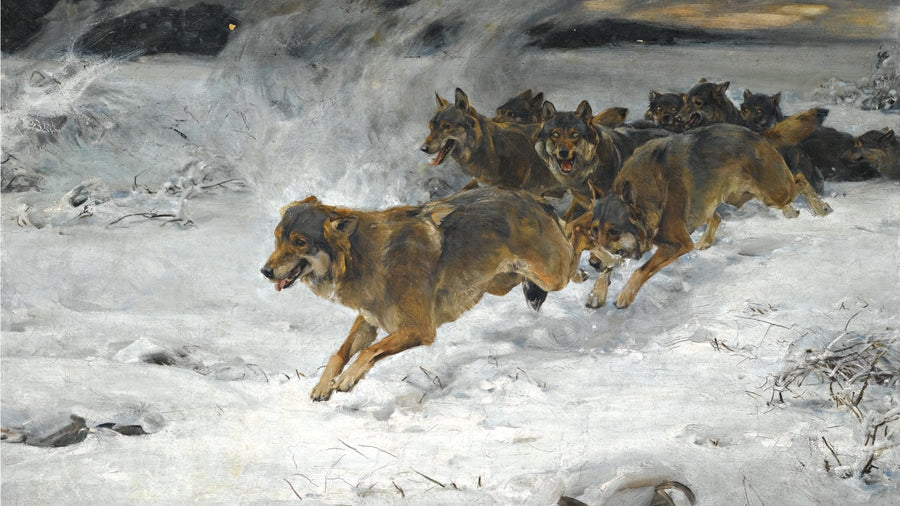
- "The Werewolf" (Tale IV), if you liked "A Terrible Vengeance", the darkest of Gogol's eight, or "Viy": a young man bewitched at his sweetheart's wedding lives for years as a wolf with a human mind.
- "Daring Deeds" (Tale II), if you liked "May Night": a forest spirit struck with a stone, a whirlwind greeted as a brother, a witch's daughter and a haunted stone on a hill.
- "The Weeping Woman" (Tale VI), for a ghost story that is also an elegy.