The White Magpie: The Belarusian Witch Who Was an Empress
In Barszczewski's Nobleman Zavalnia, a snow-white magpie turns into a lady, buys the local gentry with gold and leaves the villages blighted. Here is her tale, the village witch-lore behind it and the empress hidden inside it.
In this post
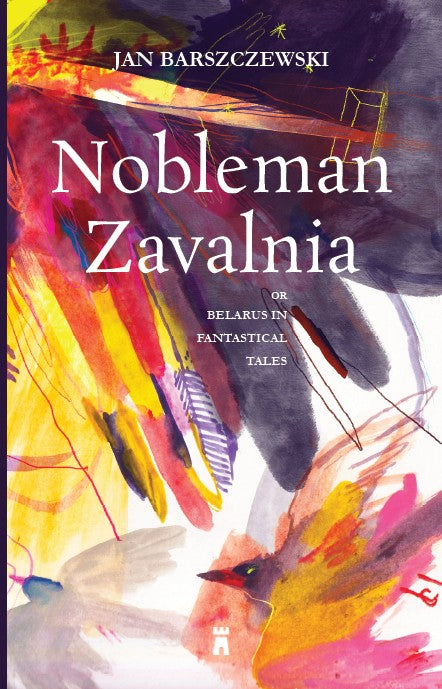
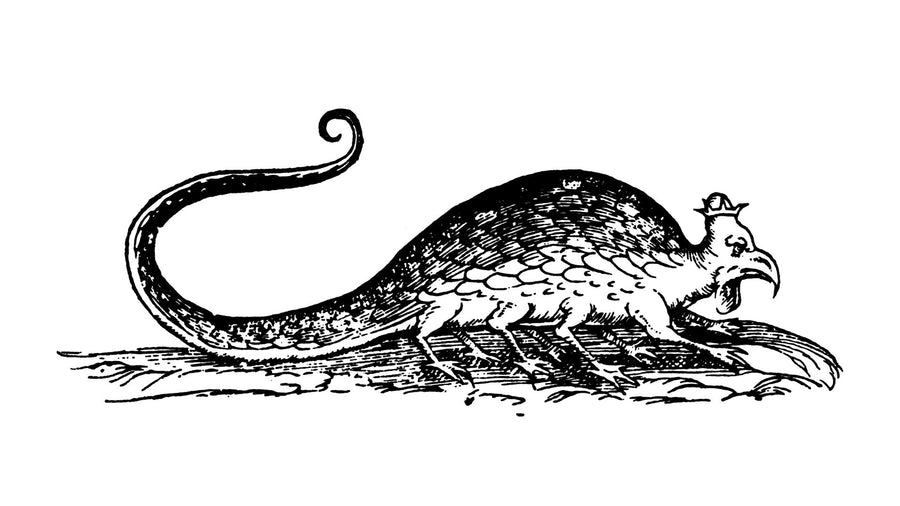
The White Magpie is a witch from a Belarusian tale of the 1840s: a snow-white bird who turns into a dazzling lady, buys a greedy landowner with a sack of gold, wins over his neighbours with midnight toasts and leaves the villages blighted. She comes from Jan Barszczewski's Nobleman Zavalnia, or Belarus in Fantastical Tales (1844–46), and each of her crimes comes from real village belief about witches. She is also, as Belarusian readers have long suspected, a portrait of a real woman.
Here is the tale, the folk belief behind it and the reading that turns it into history. The full tale is in the illustrated Nobleman Zavalnia, with full-colour pictures by Nasta Lee.
Where the White Magpie comes from
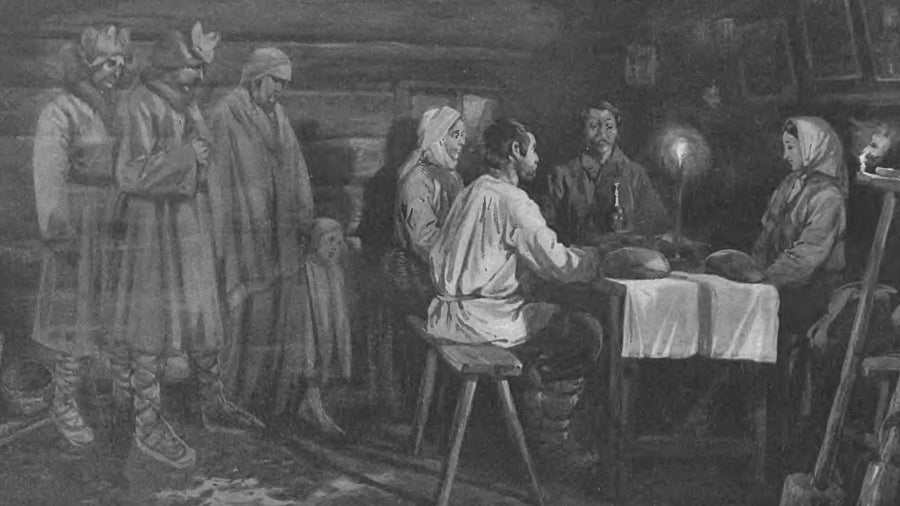
Barszczewski (died 1851) grew up near Polatsk, in what is now northern Belarus, and wrote in Polish in St Petersburg. His book is a frame tale set in the winter of 1816–17. Pan Zavalnia, a country nobleman (Pan is roughly "Mr."), shelters travellers caught by blizzards, and the price of supper is a story; our comparison with Gogol's Dikanka shows how differently the two writers used that device. This tale is told by Jakush, a coachman, after the company mentions a nobleman who has sold young serfs away from their mothers. A White Magpie, Jakush says, would make that man a fitting bride.
The story of the White Magpie
On the shores of Lake Jazna, where the districts of Polatsk, Siebezh and Nievel meet, there lived a landowner still remembered by a nickname, Skamaroha. He was arrogant and greedy, sued widows and orphans, and made his serfs' lives hell on earth.
One stormy evening a figure appears in his room: tall and thin, with spindly legs, bulging round eyes and a small sharp face like a bird's. He has put Skamaroha's huge black dog and the servants into a deep sleep. By night, he says, he listens to what the common people say and to what their masters secretly think. He is the messenger of the White Magpie, whose wisdom astonishes the world. Lords and sages bow to her, and tamed bears serve her like dogs.
The next night a magpie white as snow flies in at the window and becomes a tall lady glittering with jewels. Do the people of this land want for anything, she asks? Nothing, says Skamaroha, and talks until midnight about the rivers Drysa and Dzvina, his neighbours, the income from his farms and the trade with Riga. When she has gone, her messenger hands him a sack of gold, to keep him loyal and so that he will bring others into her devotion.
That night the watchmen see a dragon flying north, and a woman is heard weeping in the cemetery. Skamaroha rides from estate to estate, praising the White Magpie. A few neighbours suspect treachery; most beg for his good word. Soon they gather at his house, bar the servants from the room and fill the table with wine. At midnight he toasts her health, and she darts in among the glasses, becomes a lady again and asks each guest kindly about his estate and his income. They drink to her until dawn, and after that she visits them house by house, always at night.
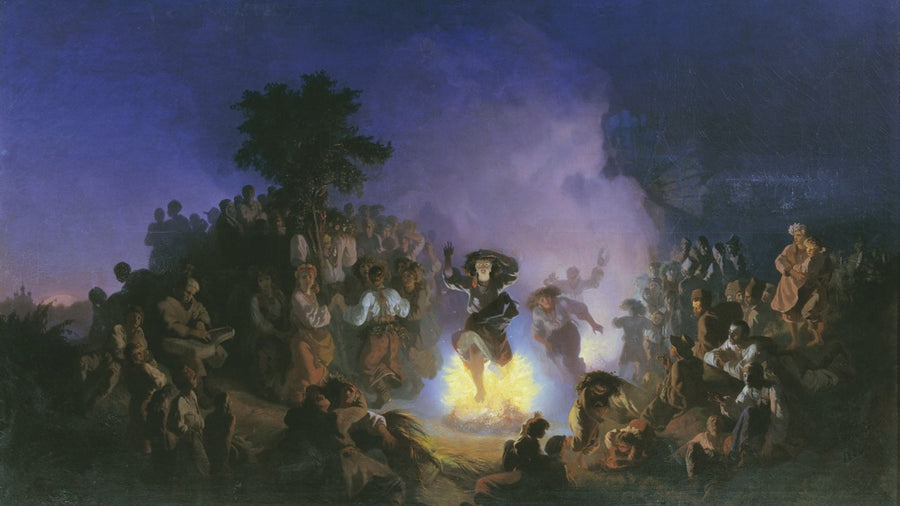
Then the land sickens. In the village of Klishkova the cows wither and their milk vanishes, and a guard sees a snow-white magpie fly out of a woman's house. The villagers watch her and learn her secret. On Kupalle night, the Belarusian midsummer festival of bonfires that lasted until dawn, she goes into the forest, gathers dew and summons evil spirits to fill her vessels with other people's milk. But a new servant girl has turned the jugs and tubs upside down to dry, so all night the spirits pour the milk onto the ground, and by morning a river of milk is flowing from under the witch's house. She escapes as a bird.
Next come knots twisted in the rye, nimble little creatures that shear the sheep, bears that ruin the beehives, and packs of werewolves in the fields, each with a ring of fur the colour of the scarf it wore as a human. When the White Magpie hears the people cursing her and learns that hunters are after her, she flies away for good. Jakush ends:
"But the evil she had sown spread across the land. Those who once drank to her health now drink the tears of the poor."
Skamaroha, they say, guards the treasures of her palace in the shape of a terrible bear.
Were magpies witches in Slavic folklore?
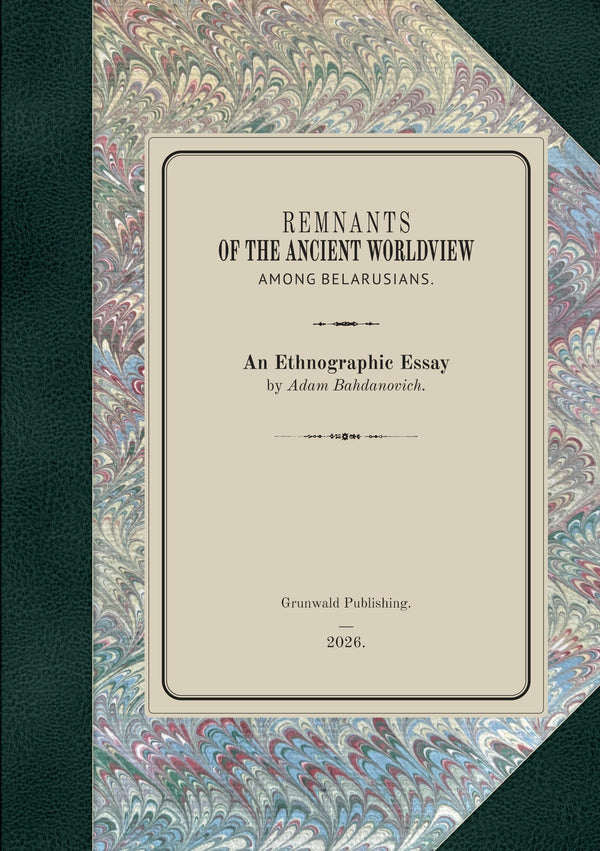
To a village listener, almost none of this was invented. Fifty years later the ethnographer Adam Bahdanovich recorded Belarusian beliefs in Remnants of the Ancient Worldview among Belarusians: An Ethnographic Essay (1895), translated from the Russian, edited by Olya Ianovskaia. Of all the accomplices of the unholy, the people believed to be in league with the devil-world, witches had the worst name. They steal the milk from other people's cows, he writes, and twist zalomy, knots tied in the standing rye, to bring crop failure, sickness and death. A witch can turn into a magpie or a black cat. On Kupalle night she goes round the gardens collecting dew in a milk strainer, and the cows whose dew she takes lose their milk. Even the bird-faced messenger has a village model: the magpie was a prophetic bird, and some sorcerers kept such birds in their service to bring them news. A Kupalle bonfire song asks for protection from exactly the tale's two crimes:
So that witches might not twist zalomy,
Might not take the milk from the cows.
Nikolai Nikiforovsky, a peasant's son born near Vitebsk in 1845, collected more than two thousand omens and beliefs in Barszczewski's own region. He warns that a magpie chattering good news at the window may be a witch, and that if you trust it, the opposite will happen. And in 1890 a villager told him about the white magpie itself:
"The magpie is not yet white all over; but a time will come when it turns white entirely, and then women will stop giving birth to children."
A wholly white magpie meant the end of a people. Bahdanovich and Nikiforovsky wrote in Russian, half a century after Barszczewski, and neither mentions him: they are independent witnesses to the beliefs he used. He did not need to invent an evil magpie. He found her in the village, made her white and gave her a crown.
Who is the White Magpie? The empress in the tale
Now look at the map. From the 14th century the Belarusian lands belonged to the Grand Duchy of Lithuania, which joined the Kingdom of Poland in 1569 to form the Polish-Lithuanian Commonwealth. In 1772, 1793 and 1795 Russia, Prussia and Austria partitioned the Commonwealth, and the Belarusian lands went to the Russian Empire. Lake Jazna lies in the corner taken first, in 1772.
Mikola Khaustovich, the Belarusian scholar who translated Zavalnia into Belarusian, reads the tale as the eve of that first partition. The lady in the palace, admired by lords and sages, who asks about rivers, trade and incomes and pays the local lords to win over their neighbours, is Catherine II, Empress of Russia from 1762 to 1796, in whose reign all three partitions took place. Skamaroha stands for the local magnates who served her. When the Kupala National Theatre in Minsk staged the book in 2019, its White Magpie spoke Russian with a German accent. Catherine was born a German princess.
The tale's real subject is how annexation works. No army marches through it. A stranger listens at the walls; a local lord is flattered and paid, and recruits his neighbours; the gentry drink toast after toast; and the bill falls on the peasants. To village readers, the ruined cows, fields and flocks were a witch's trademark. Barszczewski took the most feared figure in the village and set her on a throne.
He could not say it openly. When he launched a Polish almanac in St Petersburg in 1840, Niezabudka (Forget-me-not), the censor cut its first volume heavily. That same year officials were told to stop calling these provinces Belarusian. Barszczewski put Białoruś, Belarus, on his title page anyway, and presented its history as fantastical tales, a label that, Khaustovich argues, was there to mislead the censor.
Why Nobleman Zavalnia matters
The woman heard weeping in the cemetery on the night the messenger came is, for Khaustovich, the Weeping Woman, Barszczewski's ghost who mourns for Belarus. The werewolves in the fields have a tale of their own, the story of Marka the werewolf. And the witch-magpie has plenty of village sisters in our guide to Slavic witches, sorcerers and healers. Together they make a rare book: genuine folk horror that is also a coded history of a country that had lost its state. Ours is its first complete English translation, and the premium edition is a hardcover illustrated in full colour by Nasta Lee.