Slavic Folklore Creatures: A Belarusian Field Guide
House spirits, forest giants, water maidens, witches, werewolves and vampires: a field guide to Slavic folklore creatures as Belarusian villagers described them in 1895, with notes on Barszczewski's tales.
In this post
The creatures of Slavic folklore are the spirits, monsters and uncanny people that villagers believed shared their world: a house spirit behind the stove, a forest spirit as tall as the pines, water maidens swinging in the birches, witches, werewolves and the dead who walk at night. In Belarus many were still part of everyday life in the 1890s, when the ethnographer Adam Bahdanovich wrote them down from peasants, healers and millers.
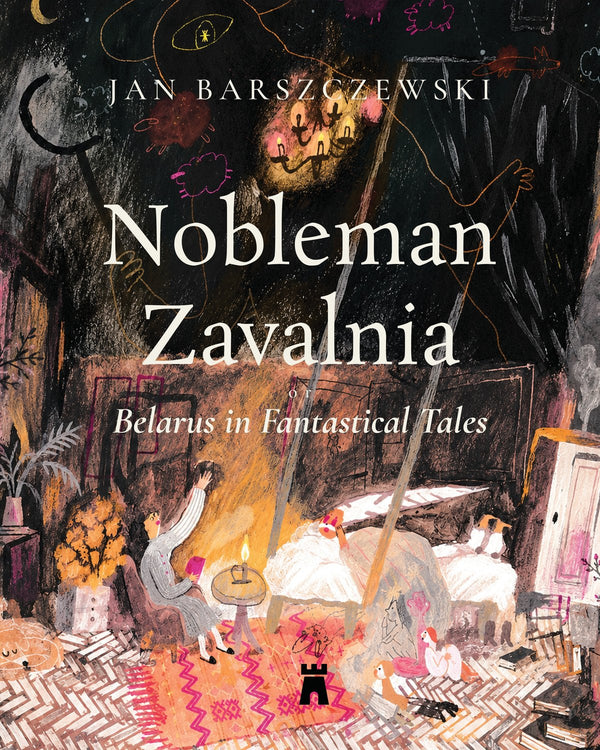
This field guide to Slavic folklore creatures is built from his record, Remnants of the Ancient Worldview among Belarusians (1895), now in English for the first time. Where a creature also appears in Jan Barszczewski's tales of northern Belarus, Nobleman Zavalnia (1846), we say so. We have kept to what these two books record.
Slavic, Russian or Belarusian?
Most of these beings are shared across the Slavic world under local names; Bahdanovich himself compares the Belarusian khatnik with the Russian domovoi. If you know the monsters of Russian mythology or Polish legend, you will recognise most of them. What Belarus adds is detail: what each spirit ate, where it slept and how a household stayed on its good side.
Spirits or demons? How villagers sorted Slavic creatures
Villagers still told the house and nature spirits apart from devils:
The vodianoi, the leshy and the other elemental gods can do evil, but they need not; the devil cannot help it, for that is his very nature.
This guide follows that division, ending with the Devil and the people said to serve him.
Spirits of the house and farmyard
Domovoi (khatnik, damavik): the house spirit
What it is: the master of the house, called khatnik or hospodar ("the master") in Belarus and damavik (дамавік) in Barszczewski's tales. He appears as a little old man with a grey beard and long grey hair, in a linen caftan or white shirt.
Where it lives: on or under the stove, hence the name podpechnik, "the one under the stove", and in the warm storehouse.
What it does: he startles the rooster into crowing to wake the household, turns the grain, tends the livestock and rocks crying children. A quarrelsome family member may wake to find him lying heavily on his chest. He dances on the bench when good times are coming and howls before misfortune.
How villagers dealt with it: by keeping the peace. In some districts a rooster's head went under a corner of a new house, and hair and nail parings into the cracks of the walls, echoes, Bahdanovich thought, of old offerings to the spirit of the hearth.
Yevnik and laznik: the drying-barn and bathhouse spirits
The domovoi's "own brothers". The yevnik, black with soot, lives on the drying-barn stove and winnows the grain at night; angered, he throws sheaves into the fire and burns the barn, so a sheaf was left for him after threshing. The laznik bathes after midnight: leave him a broom and water, and do not stay late, or he will throw stones from the stove.
Khlevnik: the barn spirit who rides the horses
The khlevnik (Barszczewski's chliaunik) is no friend. He rides the horses at night until they are lathered, thin and dying, and rides the cows until their milk dries up. He fears magpies, so coachmen hung one over the stable door. A healer's surest cure: a knotted hemp whip on an aspen handle, a brazier of aspen coals at the new moon, and every animal driven over the fire to a charm ending "Khira, into the forest!".
The house snake and the snake king
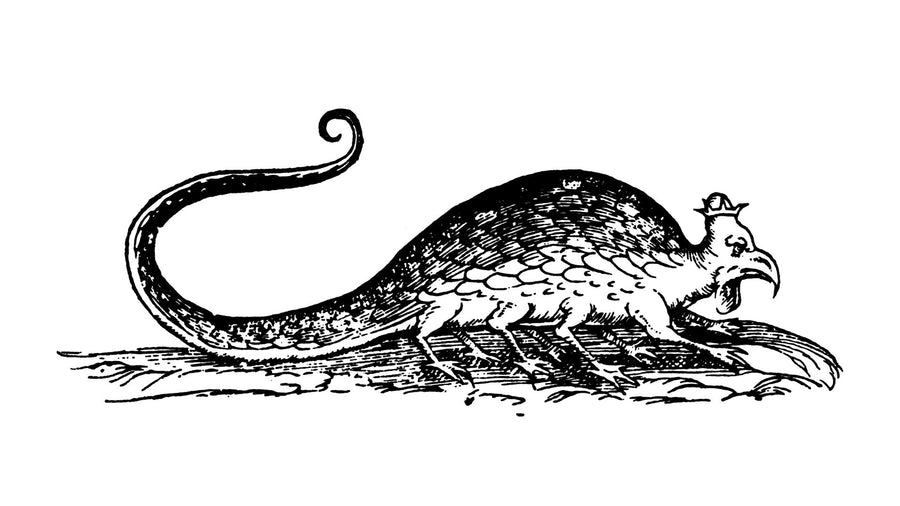
In marshy districts a grass snake living in the house was a household god, fed and never provoked; killing one was a great sin. All snakes have a king, who leads them to their winter sleep, his scales shimmering silver and gold under a crown of small golden horns. Spread a tablecloth before him with bread and salt, bow to the ground, and he may shake off a horn that brings wisdom and protection from poison.
In Barszczewski's tales: in "The Serpent's Crown", a huntsman lays a white handkerchief before the Serpent King, receives a golden crown and learns the price. The whole story is in The Serpent King and His Golden Crown.
The fiery serpent: a dragon from a rooster's egg
Of any well-off peasant, Belarusians said "the serpent brings him money". A black rooster that lives seven years lays an egg shaped like a snail shell. Carried under the armpit for three years, it hatches a little serpent that must be fed fried eggs, never salted. Grown, it flies off to fetch treasure for its master; angered, it burns his goods. Witnesses described a giant grass snake, "all golden, glowing like embers, and winged". The tsmok (цмок), the Belarusian dragon, appears in the book's charms and devil legends.
In Barszczewski's tales: the first tale, "A Sorcerer and the Dragon Hatched from a Rooster's Egg", follows a servant who raises one. It brings grain in its black form and gold when it comes wreathed in flame. More in The Dragon Hatched from a Rooster's Egg.
Spirits of water, forest and wind
Vadzianik (vodyanoy): the water spirit
The vadzianik (вадзянік; Bahdanovich's vodzianik) lives in "living" water: springs, whirlpools, deep rivers and lakes, and anywhere that does not freeze, because his breath melts the ice. He demands human sacrifice, and the drowned are his prey. When one grew too greedy, a woman healer dived down and plugged the lake's spring with pea stalks and a stone until it dried up. Millers kept him sweet with salt pork lowered under the wheel at the first frost, "so the wheels won't creak".
Rusalki: the water maidens in the birches
What they are: beautiful women with long, loose hair (singular rusalka, русалка). Some believed that children who died before baptism became rusalki.
Where they live: in the water from autumn until Rusalka Week, the first week after Trinity; then in the trees, especially birches.
They swing on the pliant branches, calling to passersby: "Man! Man! Come and swing with us!" And if anyone is foolish enough to come close, they tickle him to death.
How villagers dealt with them: nobody bathed before Rusalka Week, for fear of illness or drowning.
In Barszczewski's tales: "When the rye blooms in the field, rusalkas swing on birch trees, their long hair flowing in the wind as they sing." More in Rusalki: Slavic water maidens.
Leshy (lesavik, liasun): the forest spirit
What it is: to Bahdanovich, the most majestic figure the Belarusian imagination created. The forest spirit is as tall as the trees he roams among and grows or shrinks to match them. He wears wolf and bear skins with the fur outward, and his eyes burn like a wolf's or an owl's.
Where it lives: in the matochnik, the heart of the primeval forest, ringed by bogs that never freeze, where large beasts go to die. In small woods the leshy is smaller, but he can still set wolves on you.
How villagers dealt with it: foresters bought him off. On Annunciation Day, at the forest edge, they circled bread and salt with their own hair pressed into it around their heads, recited a charm, cried "Let my hair be enough!" three times and flung the bread away.
In Barszczewski's tales: in "Daring Deeds" a liasun, his head above the pines, drives squirrels, hares and birds from one forest to another, then shrinks to a dwarf in the grass. More in Leshy: the forest spirit.
Podvei and the nochnitsy: spirits of wind and night
Podvei is the spirit in the whirlwind. It can twist a man's head or cripple a limb; if you cannot get out of its way, show it the fig. The nochnitsy are "small, wicked spirits of the night" that keep babies screaming; the cure was to rock the child before the stove fire while whispering a charm.
The restless dead
Upyr: the Belarusian vampire
What it is: the upyr (упыр) or vupar. Only people who had dealings with evil spirits in life become vampires after death.
What it does: at night it lies on the chest of an enemy, or sometimes a friend, and sucks blood from the heart through a tiny wound made with its sharp, sting-like tongue. It still looks like the person it was, except for lips swollen from sucking; the victim's only sign is a pale face.
How villagers dealt with it: a candle hidden under a pot, uncovered after midnight, reveals the vupar; strike it with an aspen log. To end it for good, find which dead sorcerer it resembles, dig him up, cut off his head, put it between his legs and pin the body down with an aspen stake. A line drawn in chalk or charcoal while calling on Chur, the ancestral guardian ("Chur miane!", "Chur protect me!"), also keeps vampires out.
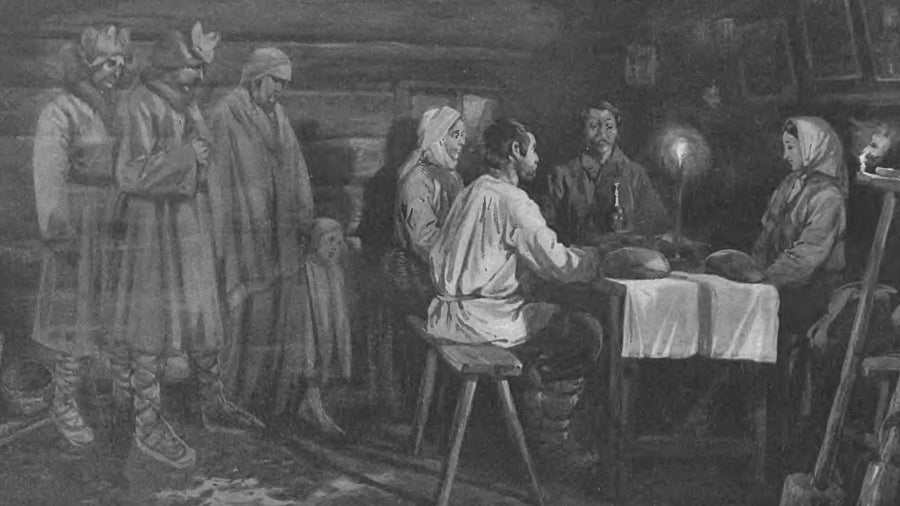
A soul doing penance may settle in a tree, which then creaks, so stave-makers would not fell one. Several times a year the family dead are invited home to eat: see Dziady, when the dead come home to supper.
The Devil and his accomplices
The Devil
He looks like a satyr, with horns, hooves and a cow's tail. In a thunderstorm he turns into a bleating kid, gets carried home in a kind man's coat, grows heavier with every step, then leaps out laughing. He leads travellers astray and lures drunkards into bogs. The chief devil is chained inside a stone mountain; people's sins wear the chain thin each year, and the Easter hymn restores it. But "on the whole, the Belarusian devil is small-time".
Witches (vedzma and vedzmak)
What they are: women and men (vedzma, ведзьма, and vedzmak) believed to be in direct league with the Devil; of all his accomplices, they had the worst name.
What they do: a witch brews a potion of herbs, a fox's heart and a cat's liver that makes her beautiful and lets her fly "on the wind" to a yearly sabbath on a bald hilltop. She steals other people's milk, twists knots (zalomy) in the rye to bring crop failure, casts the evil eye and can turn into a magpie or a black cat.
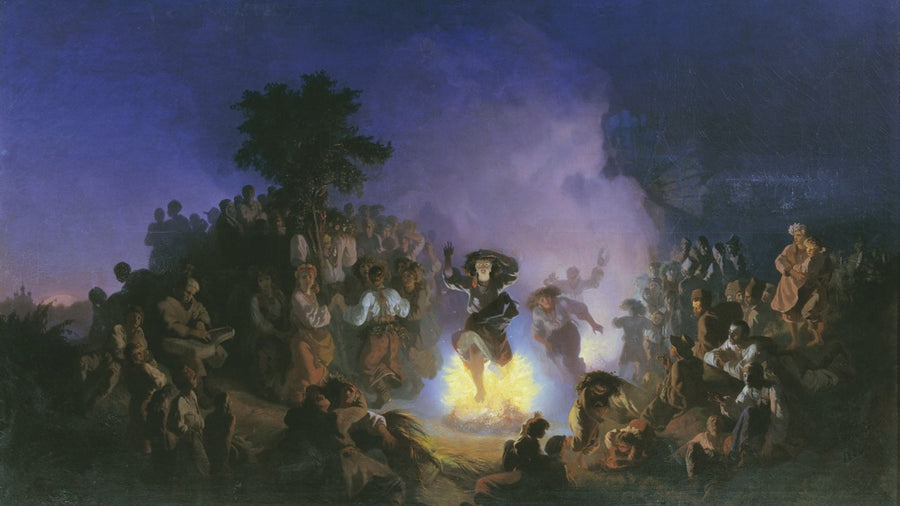
How villagers dealt with them: on Kupalle night, when witches gather dew to steal the milk, housewives guarded their gardens until dawn and drove the cows through a fire at the gate. If the milk was taken anyway, a strainer boiled in Kupalle herbs made the witch waste away. The book also prints an 18th-century steward's letter reporting that he had burned six women for sorcery: these beliefs cost real lives. More in Slavic witches, sorcerers and healers.
In Barszczewski's tales: "The White Magpie" is a witch-lady who flies in as a snow-white bird, and in "The Werewolf" the cat-and-magpie witch Aksinia lives deep in the forest. For more, see our Eastern European folk horror books and what Barszczewski shares with Gogol's Dikanka.
Sorcerers and healers (charovnik and znakhar)
A charovnik (sorcerer) works enchantments; a znakhar heals. To be called a healer was an honour, while "witch" and "werewolf" were insults. Trades had their own sorcery: a miller kept the water spirit happy, a herdsman drove out the khlevnik, a forester appeased the leshy. Known sorcerers got the seats of honour at weddings, so they would not bewitch the couple.
Vaukalak: the Belarusian werewolf
What it is: the vaukalak (ваўкалак), the Belarusian form of the Slavic volkolak: a person who turns into a wolf and devours people and cattle. He is bigger than a real wolf, with four eyes, two in front and two at the back of his head.
How it changes: by somersaulting three times over a knife stuck in the ground while saying a spell nobody could tell Bahdanovich, and back again the opposite way. Pull out the knife while he is gone, and he stays a wolf forever. A sorcerer can also turn an ordinary person into a wolf against his will:
He too will be forced to feed on people and animals, but when dogs are set on him or someone tries to kill him, he weeps human tears.
In Barszczewski's tales: in "The Werewolf" a young peasant, bewitched at his sweetheart's wedding, spends years as a wolf with a man's mind. "Don't shoot, sir!" a coachman warns his master on seeing two wolves. "They have human souls." The full tale, and what it hid, is in The Werewolf of Zavalnia.
Field guide at a glance
| Creature | Where it lives | Protection or offering |
|---|---|---|
| Domovoi (khatnik) | Stove, storehouse | Family harmony; hair and nail parings in the walls |
| Yevnik, laznik | Drying barn, bathhouse | A sheaf for the yevnik; broom and water for the laznik |
| Khlevnik | Stable, cattle shed | A magpie over the door; whip and aspen coals |
| Snake king | Wild, on the way to winter | Tablecloth, bread and salt, a bow |
| Fiery serpent | Storehouse | Unsalted fried eggs |
| Vadzianik | Springs, whirlpools | Salt pork under the mill wheel |
| Rusalki | Water, then birches | No bathing before Rusalka Week |
| Leshy | Heart of the forest | Bread with the forester's hair |
| Upyr | The grave | Aspen log, aspen stake |
| Witch | The village | Fire at the gate on Kupalle night |
| Vaukalak | Forest, in wolf form | Saint George, guardian of the herd |