The Serpent King and His Golden Crown
The serpent king, his crown of golden horns and the gift he leaves for those who bow to him, as Belarusian villagers described them, and Barszczewski's tale of the huntsman who took the crown and paid for it.
In this post
The serpent king is the ruler of all snakes in Slavic folklore: a huge serpent with a golden crown who leads his subjects to their winter sleep. In Belarus, villagers believed that anyone who met that procession, spread a cloth before the king and bowed could receive a gift from his crown, and with it wisdom and protection from poison. In the 1840s Jan Barszczewski turned the belief into a tale about a huntsman who takes the gift, and pays for it.
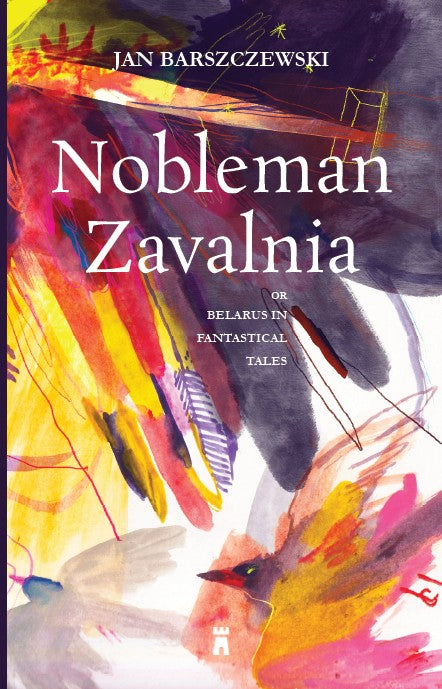
That tale, "The Serpent's Crown", is the third story in the illustrated Nobleman Zavalnia, a cycle of tales set in the lake and forest country around Polatsk in northern Belarus. Half a century later the ethnographer Adam Bahdanovich recorded the same belief in the villages. Here is what each of them wrote down, and what Barszczewski changed. For the other spirits of the Belarusian house, forest and water, see our field guide to Slavic folklore creatures.
What is the serpent king in Slavic folklore?
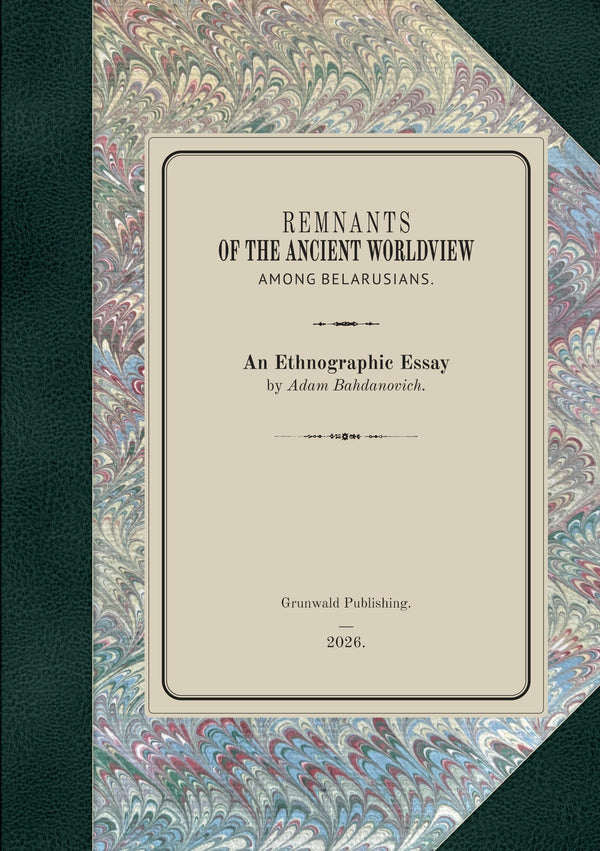
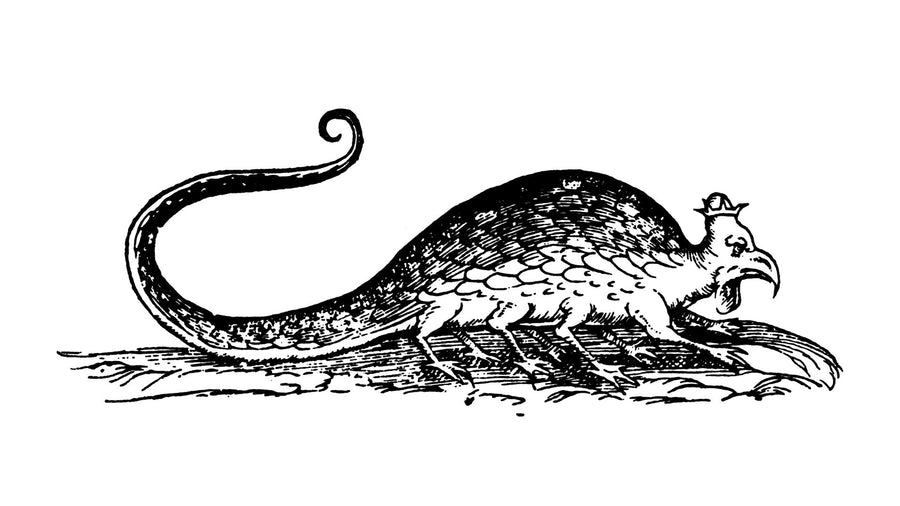
Bahdanovich describes him in Remnants of the Ancient Worldview among Belarusians (1895). All reptiles, he was told, have a king, and under his command the snakes go off to their winter sleep. The king crawls in front, bigger than any of them, and his countless subjects follow. His scales shimmer with silver and gold, and "on his head is a crown of small golden horns."
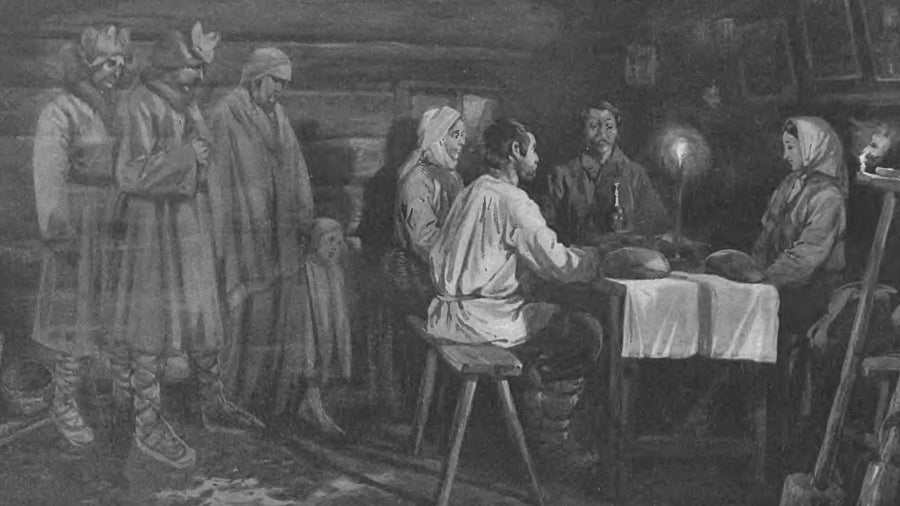
Few people ever see this migration, which passes where no human can go. But whoever does meet it should spread a tablecloth before the king, lay bread and salt on it and bow down to the ground. As the king crawls across the cloth, he shakes one golden horn off his head in thanks. Its owner can guess other people's thoughts, always find the fitting answer and get out of the most difficult situations, and no poison can harm him.
The house snake: a Belarusian household god
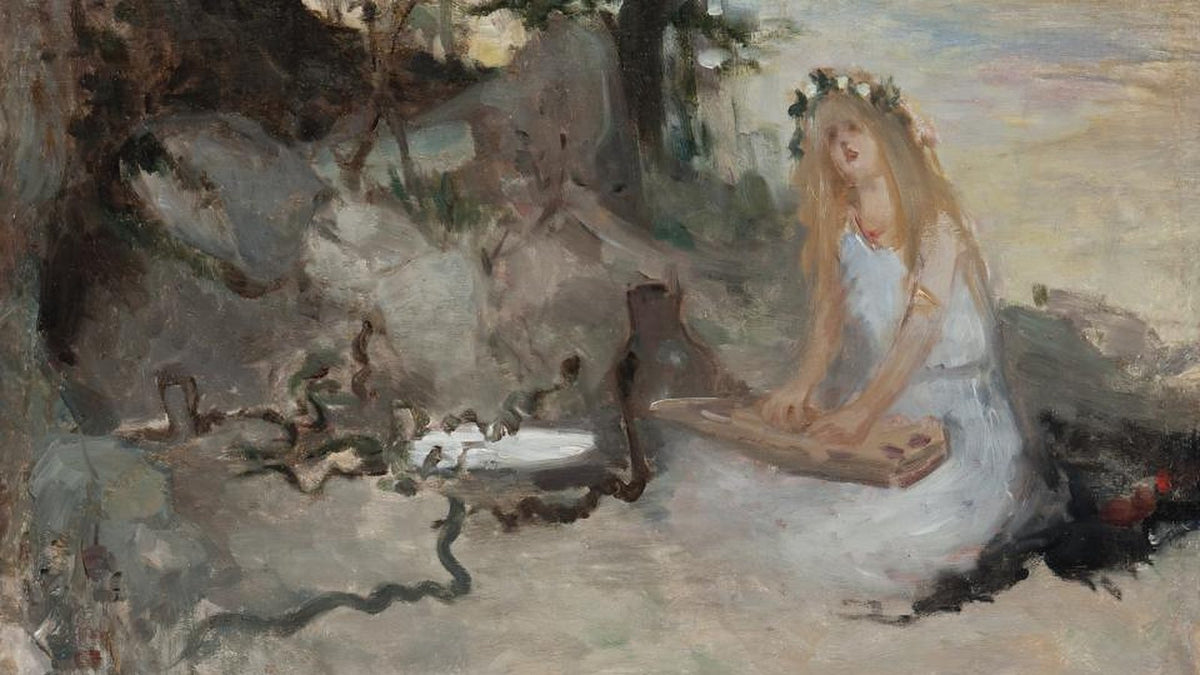
Of all animals, Bahdanovich found, snakes, and above all grass snakes, aroused superstitious veneration. In some marshy districts they still played the part of household gods. A grass snake settled in a house brought good fortune if it was kept content, and took cruel revenge if it was angered, so peasants set out food and drink for it.
He was told one story as true. A family took a house snake's eggs from the cattle shed to see what it would do. The snake began spitting venom into the milk pots, and the eggs were hurried back. Seeing them returned, the snake knocked the pots over one by one, so that no one would be poisoned for nothing. Killing a grass snake was a great sin; killing a viper earned the forgiveness of twelve sins.
"The Serpent's Crown": the tale from Nobleman Zavalnia
In Barszczewski's book, travellers caught by blizzards on a frozen lake shelter at the manor of Pan (Mr.) Zavalnia, and the price of supper is a tale. This one is told by a peasant traveller.
Siamion is a huntsman on an estate. He owes no corvée, the unpaid field labour that serfs owed their lord; his work is to guard the forest and bring game to the manor. One autumn Wednesday the steward orders black grouse, capercaillie and partridges by Sunday, no matter what. Siamion hunts for two days and sees nothing but woodpeckers, and his hungry dog runs home. Sure the master will call him lazy, he thinks that he would kneel before the devil himself if only the devil would help.
At once a huge black dog sits down in front of him and stares. An old man in a long robe comes out of the forest. Tomorrow is September 14, he says. Siamion must walk through the night to Elk Mountain, where at dawn he will find the slopes covered with snakes and the Serpent King among them. If he lays a white handkerchief before the king, kneels and bows, the king will toss his golden crown onto it and go into his winter shelter. On the way he must "fear nothing, marvel at nothing", or the effort will be wasted. With the crown, the black dog will lead him to game on every hunt.
At midnight a bear rears up on Siamion's path, wolves with eyes like coals surround him, and a giant taller than the trees swings an uprooted pine. He walks on. A palace of gold and silver appears in a garden where spring and summer bloom together, and girls in flower wreaths beckon. He neither marvels nor stops, and the vision fades.
At sunrise he reaches the mountain. The snakes hiss but part to let him through. The largest serpent he has ever seen comes forward with gold gleaming on its head, drops its crown onto the cloth and leads the others over the crest. The crown is "two glowing leaves fused at the tips."
On the way down the black dog appears and stops beneath tree after tree where a bird is hiding. Siamion becomes the most famous hunter in the district: birds seem to fly straight at him, and he never misses. People whisper that he is a sorcerer. His old friend Akim creeps to his window one night and sees him stroking the same black dog, which turns its bloodshot eyes on him.
Then Siamion falls in love with Marysia, a pious girl from a nearby village. She has heard the rumours. If he is no sorcerer, she says, let him kiss her cross, blessed during a church Jubilee, a holy year of special pardons. He kisses it. A huge serpent rises from the grass as if to strike her, and Siamion drives it off with a stone. The black dog appears, barks once and is gone.
From that day his luck is broken. He fires at a capercaillie and a rotten stump crashes down. At home, snakes pour hissing from under the hearth and the bench. In his chest, the golden crown has become two withered birch leaves. The snakes give him no peace, at home or at his neighbours'.
There the tale stops. A knock at the gate announces a new guest, Zavalnia hurries out to greet him, and the evening moves on to the tale of the werewolf. Nobody says how Siamion's story ends.
Watch "The Serpent's Crown"
Grunwald has made the tale into a short animated film.
What Barszczewski kept from folk belief, and what he changed
Set the tale beside Bahdanovich and most of its fantasy turns out to be recorded belief. The snakes go underground for the winter, led by their king. The seeker spreads a cloth, bows to the ground and receives something from the king's head. Even the date is folk calendar: September 14 is the feast of the Exaltation of the Cross, the day when, in the Vitebsk beliefs collected by Nikolai Nikiforovsky, the snakes of a district gather and hide underground together.
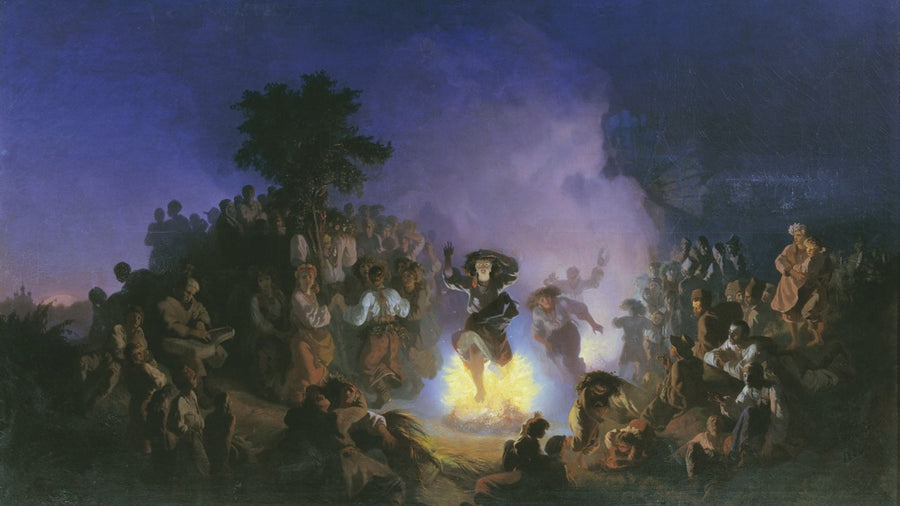
Siamion's night follows a familiar script too: Bahdanovich records that whoever seeks the fern flower on Kupalle, the midsummer night, is met by the unholy powers with every kind of terror.
The gift is where Barszczewski leaves the folk script. The folk horn brings wisdom and safety from poison. Siamion's crown brings none of that. It brings game, a reputation and a black dog at his heels: the wages of a bargain with the unholy. The tale is plain about what drove him to it: fear of a master who would not believe he had done his best. And it lasts only until he kisses the cross. Then the gold turns back into leaves, and the snakes, which bring luck to a house that keeps faith with them, swarm out of his own hearth.
The Belarusian scholar Mikola Khaustovich, the best-known reader of Zavalnia as coded history, sees the crown of fused leaves as a cockade: a badge of allegiance. Read that way, Siamion takes service with the wrong master out of fear of his own, and the badge withers when he turns back to his own faith and the girl he loves.
Two independent witnesses to one belief
Barszczewski wrote in Polish and published his tales in St Petersburg between 1844 and 1846, presenting them as fantastical tales because writing openly about Belarus risked the censor. Bahdanovich wrote in Russian half a century later, collecting chiefly in central Belarus, and never mentions Barszczewski. Their accounts of the serpent king are independent records of the same belief, which outlived them both: Bahdanovich's son, the poet Maksim Bahdanovich, wrote of the serpent king in his only book of poems, Vianok (A Wreath, 1913).
The serpent king's fiery relative, the money-bringing serpent, opens Barszczewski's book: see The Dragon Hatched from a Rooster's Egg.