Belarusian Food: 25 Traditional Dishes and the Stories Behind Them
What is Belarusian food, and what is the national dish of Belarus? A tour of 25 traditional dishes, from draniki and kalduny to kuttsia and birch sap, with the history behind each.
In this post
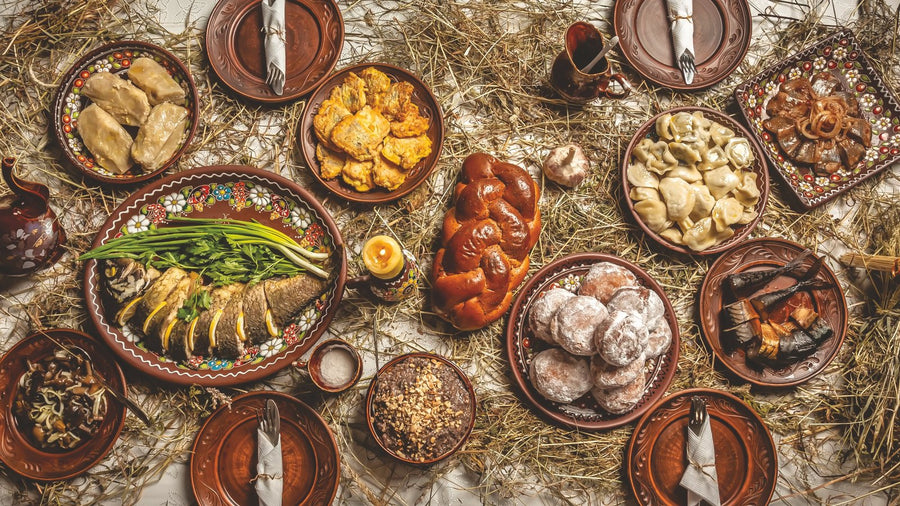
Belarusian cuisine is the food of a cold, wet country: sour rye bread, buckwheat and barley, cabbage, beets, mushrooms, pork, sour cream and, above all, potatoes. The national dish is draniki (дранікі), crisp pancakes of grated potato eaten hot with sour cream or dipped in a pork gravy called machanka. Around these staples grew a cuisine shaped by peasant and manor kitchens, and by the Lithuanians, Poles, Jews and Tatars who shared the land.
The 25 dishes below are a tour, not a recipe collection. Each comes with the story behind it, and the full recipes are in The Belarusian Cookbook by Aliaksandr Biely, which gathers more than 200 dishes from village kitchens and noble tables alike.
What is Belarusian food?
Climate decided most of it. Rye grew more reliably than wheat, so dark sour rye bread became the everyday staple, and even stale bread was turned into kvass. Dairy meant tvaroh, a fresh cottage cheese, and smiatana, sour cream, which tops soups, pancakes and dumplings. Buckwheat, pearl barley, millet and oats go into soups and porridges. Cabbage, carrots and beets fill the pot, fresh or fermented, and mushrooms are eaten fresh, dried, salted, marinated and even powdered.
If Belarus is known for one food, it is the potato. Belarusians are jokingly called bulbashi, "potato-eaters", from bulba (бульба), potato. Pork is the main meat, and salt pork, sala, was once valued as highly as meat itself.
History added the rest. Biely traces a close kinship with Lithuanian cooking to the centuries the two peoples shared in the Grand Duchy of Lithuania, and notes the lasting contributions of Poles, Jews and Tatars. That is why many recipes in the book carry labels such as "Lithuanian" or "Jewish". As he puts it:
"These are not foreign dishes — they are tuteishyya, local and familiar."
There is a political story too. For decades a distinct Belarusian cuisine was treated with suspicion. After the Second World War, chefs were told to build a "new" Belarusian cuisine almost from scratch, drawing only on peasant cooking and reinventing dish names as they went.
What is the national dish of Belarus?
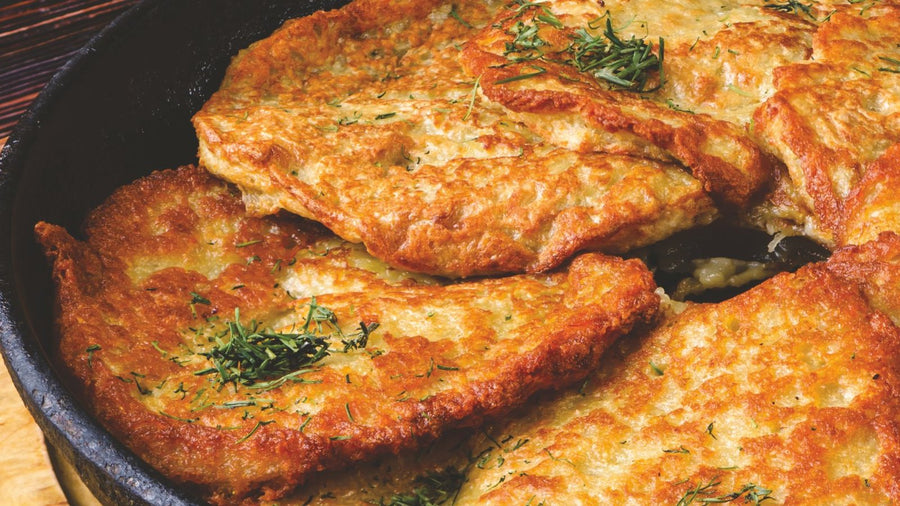
Draniki. Biely calls them "perhaps the most famous Belarusian dish": grated raw potato, sometimes with onion, fried until golden and served with sour cream, salt pork cracklings or machanka.
They are younger than most people think. Potatoes came to Belarus with German colonists in the mid-18th century and were met with suspicion at first. According to the book, draniki entered Belarusian cooking only in the early 1900s, even though most Belarusians are sure they are centuries old. For the method, see our draniki recipe, and how to serve draniki with machanka.
Potato dishes
By the early 19th century the potato had become a "second bread" that saved many families from famine, and cooks began making it into dishes once made from grain, such as kalduny, kliotski, babka and kishka.
1. Draniki
The book gives four versions: simple draniki of potato and salt, classic draniki with grated onion, stuffed draniki with mushrooms, meat, fish or egg sealed between two potato cakes, and soft, crepe-like Harodnia draniki stacked high and eaten without a knife. Our draniki guide has a basic recipe and the best things to serve with them.
2. Potato babka (бабка)
A savoury pudding of grated potato, often with pork and onion, baked in a stoneware pot until a brown crust forms. It is a cousin of Jewish kugel and Lithuanian kugelis, and the book credits 19th-century Jewish innkeepers with introducing potato dishes like it. The name comes from its round shape, which recalls the tall Easter cake also called babka.
3. Kapytki (капыткі)
"Small hooves": finger-thick potato dumplings that are baked first, then simmered in salted water or stock, and served with sour cream and onions fried with salt pork. They are a staple of Polish kitchens too.
Soups
The word "soup" only reached Belarus in the 18th century, when the nobility borrowed it from German, though soup-like dishes are far older. Traditionally, soup was often eaten at breakfast.
4. Poliuka (поліўка)
The everyday word for most traditional soups: barley or millet simmered with vegetables and thickened with flour blended into water, bread kvass, beet juice or buttermilk. Its darkest form, black poliuka, was made with goose or pork blood. Serving it to a matchmaker was a polite way for a young woman's parents to turn down a marriage proposal.
5. Batsvinnie (бацвінне)
A hot soup of young beet stems and leaves, once dismissed as "pig food" and mocked by Polish neighbours in the 17th century before it reached noble tables. The book's version simmers the greens with ham bones and potatoes and finishes them with sour cream, herbs and hard-boiled eggs.
6. Khaladnik (халаднік)
The name means "cooler": any cold summer soup, most often of sorrel, baby beets or beet stems, "whitened" with kefir, sour cream or sour milk, with cucumber, dill and egg, and hot boiled potatoes on the side. Biely points to distant relatives such as tarator and tzatziki, and says that in Belarus gazpacho would count as a khaladnik too.
7. Borshch with beet kvass (боршч)
Before beets, the book says, Slavs made borshch from sour wild hogweed, and Belarusian peasants still did in famine years into the early 20th century. By the late 19th century, fermented beets and beet kvass were the base, and keeping a store of beet kvass was a point of household pride. On Christmas Eve, borshch was served with vushki, tiny mushroom dumplings.
8. Krupnik (крупнік)
Named after krupy, cereals, krupnik is a thick soup of barley or millet. The book's versions show the country's layers: a Radziwill krupnik of chicken stock enriched with egg yolks and marjoram, and a Brisk krupnik of split peas, leeks and beans from the Jewish community of Brest. Krupnik is also the name of a honey liqueur.
9. Milk soup with noodles
A comfort soup from the Mahiliou region with unusual noodles: thin crepes of potato starch and egg, rolled up and sliced into ribbons, then simmered in sweetened milk and finished with butter or cinnamon sugar. Milk was traditionally used to "whiten" plain dishes, but in milk soups it is the main ingredient.
Dumplings and pancakes
10. Kalduny (калдуны)
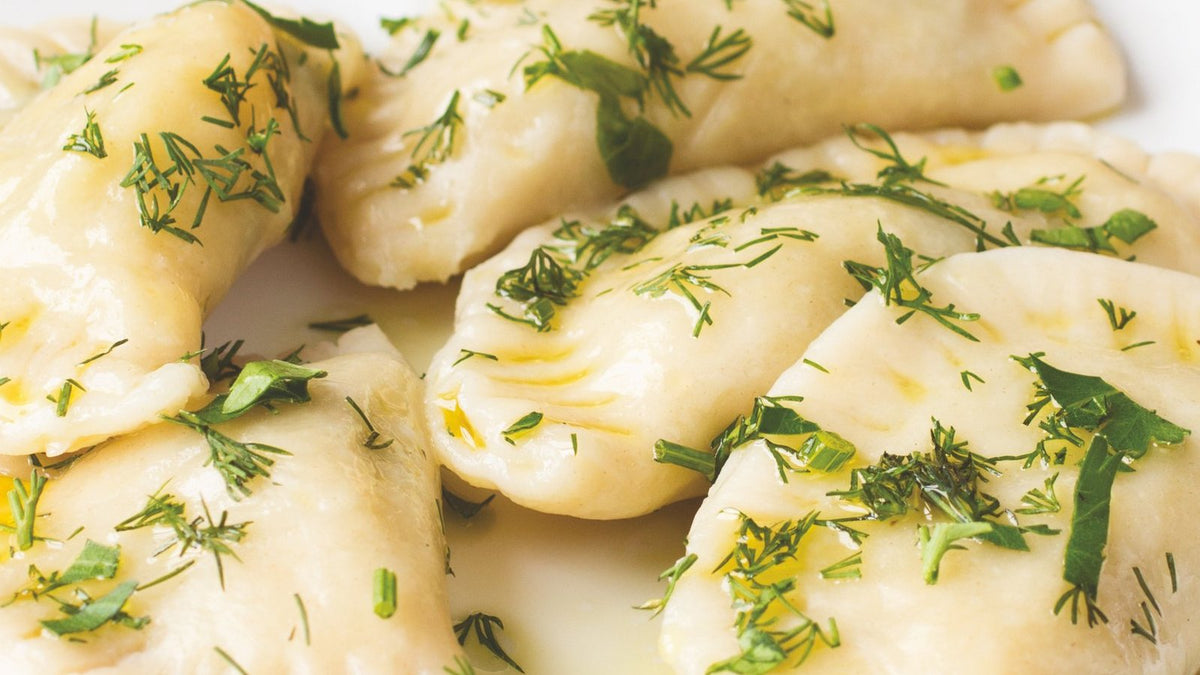
Filled dough dumplings whose name means "magicians", "sorcerers" or "wizards". Their origin is disputed. One theory brings the word from the West through a medieval Latin term; another traces the dish to kundumy, spiced mutton dumplings of the Tatars who settled in Belarus in the 14th and 15th centuries. The most famous version, Kalduny à la Tyshkevich, filled with mushrooms and smoked ham, comes from a 19th-century aristocratic family.
11. Vushki (вушкі)
"Little ears": small folded dumplings, best known filled with mushrooms and served in borshch on Christmas Eve. They belong to the meatless table described in our guide to the Belarusian Christmas Eve supper.
12. Bliny (бліны)
The general word for pancakes, which the book derives from an Old Slavic word for a mill. Traditional bliny were thick, spongy and yeast-raised, and making them is still called "baking". Round and golden, they evoked the sun in pre-Christian times and were made for Maslenitsa, the festival at the end of winter.
13. Aladki (аладкі)
Smaller, thicker fritters, such as the book's apple aladki in a yeast batter. The word also covers potato and vegetable fritters, and Biely notes that the Jewish latke comes from the same linguistic root.
14. Syrniki (сырнікі)
Fritters of farmer's cheese or cottage cheese bound with egg and a little flour, crisp outside and creamy within, served with sour cream, jam or honey. They appear on the book's Easter menu, and a boiled "lazy" version is a breakfast favourite.
Meat and dips
For most people, meat was a rarity until recently. The pig, "a peasant's treasury", was slaughtered shortly before Christmas, and every part of it was used.
15. Machanka or vierashchaka (мачанка, верашчака)
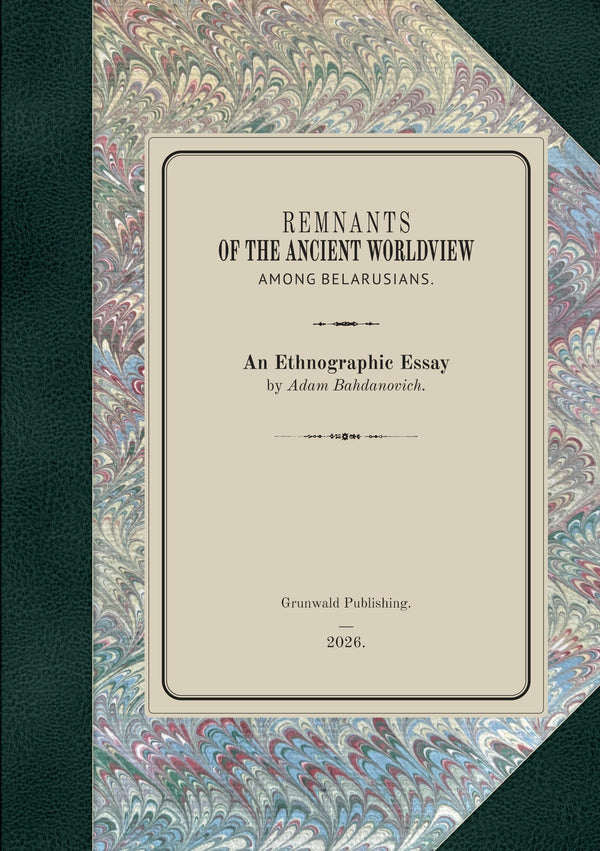
A thick pork-and-onion gravy for dipping pancakes into; machanka means "dip". The dish is believed to come from a chef named Wereszczaka at the Warsaw court of King August III, who boiled sausage in beer and served it with a spicy gravy. Its fame may have grown because Adam Mickiewicz's beloved, Maryla Wereszczaka, shared the name. Peasant households made it from salt pork, onion and bread kvass, and it was a holiday must. In 1895 the ethnographer Adam Bahdanovich recorded that "there are no Kaliady without sausage and a fatty vereshchaka" (Remnants of the Ancient Worldview among Belarusians).
16. Kishka (кішка)
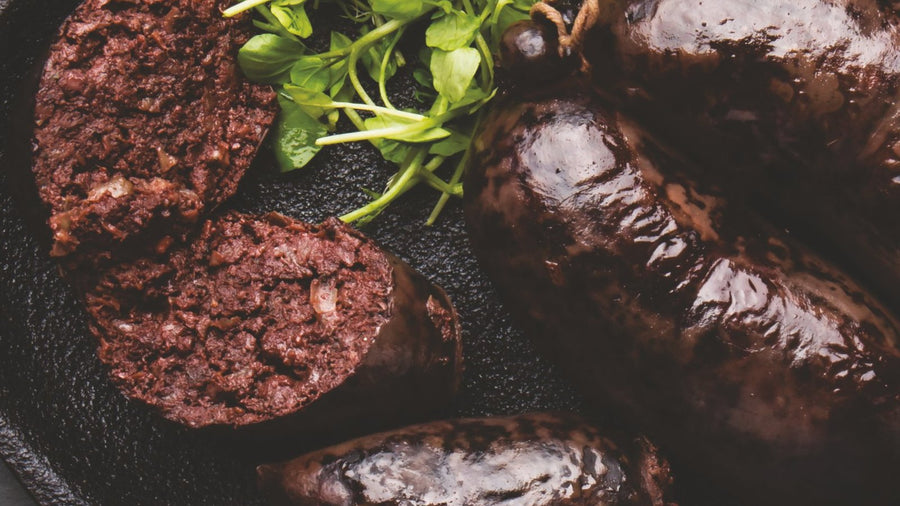
Belarus's traditional sausage comes in two kinds. The older, kryvianka, is a blood sausage of buckwheat or barley with salt pork, close to black pudding. Potato kishka, from the 19th century, drops the blood and swaps the grain for grated potato. The name is said to come from the nickname of an ancestor of the Kiszka family, 16th-century Protestant nobles, who was especially fond of the sausage. More in Kishka explained: blood sausage, potato kishka and Jewish kishke.
17. Zrazy (зразы)
Thin slices of beef pounded, filled with mushrooms, onion or egg, rolled ("twisted") and braised. Poland, Lithuania, Belarus and Ukraine all claim them. One theory credits Bona Sforza, the Milanese princess who became Queen of Poland and Grand Duchess of Lithuania in the 16th century. Today potato zrazy, with mashed potato in place of the meat, are just as loved.
18. Halubtsy (галубцы)
Cabbage rolls. Rice only reached Belarusian kitchens in the 17th century; before that, halubtsy were filled with barley or buckwheat, hand-chopped beef, onions and mushrooms. The book suggests the dish came from Byzantium with Orthodox Christianity, which makes it a cousin of Mediterranean dolma.
Grains, breads and festive dishes
19. Kasha (каша)
Kasha means any porridge of grain, not just buckwheat, and in pagan times it was a ritual food at harvest festivals, baptisms, weddings, funerals and wakes. Babina kasha, baked millet with raisins, celebrated a birth: the midwife cooked it in a new clay pot, the godfather broke the pot, and the guests ate from the shards.
20. Kuttsia (куцця)
The grain dish of Christmas Eve: whole barley or wheat with honey and poppy seeds. Kuttsia goes back to pagan times, when it was a shared ceremonial meal symbolizing goodwill and reconciliation; its present name came later, from the Orthodox Church. The suppers of Christmas Eve, New Year's Eve and Epiphany were all called kuttsia and cooked in the same pot. The book gives a simple and an aristocratic version, and our Christmas Eve supper guide covers the Lenten dishes around it.
Kuttsia feeds the dead as well as the living. Bahdanovich describes it set out on the table at Dziady, when the master of the house invites the ancestors in to share the meal.
21. Knishes (кніш)
Filled pies of soft yeast dough, with pot cheese, buckwheat kasha, sauerkraut and mushrooms, or poppy seeds. Their roots, the book says, lie in pagan funeral feasts, yet young women also baked "magic" knishes for the men they hoped to marry. Jewish emigrants from Belarus and Ukraine made them popular in North America.
22. Karavay (каравай)
The decorated wedding bread, whose name the book links to karova, cow, an old symbol of abundance. The day before the wedding, women gathered to knead it, singing and shaping birds, animals and people from the dough, and guests often kept the little figures for years.
Drinks and sweets
Desserts were rare. Until the late 19th century sugar was expensive, so honey, fruit, berries and grain did the sweetening.
23. Kisiel (кісель)
Today a smooth drink or pudding of berry juice thickened with potato starch, kisiel began as a jelly of fermented oats served at ritual feasts, especially at Christmas. The book gives both the modern cranberry kisiel and the old oat version.
24. Bread kvass (квас)
A lightly fermented drink of dark rye bread, sugar and yeast, with 0.5–2% alcohol; the name means "acid". Kvass is also a cooking liquid: it sours poliuka and khaladnik and makes the gravy for peasant machanka.
25. Biarozavik (бярозавік)
Birch sap, tapped in spring and drunk fresh or fermented with roasted barley, blackcurrant sprigs and raisins. The custom runs so deep that the Belarusian name for March, sakavik, means "sap month".
Is Belarusian food the same as Russian or Polish food?
It overlaps with both but is neither. Belarusian cooking shares East Slavic roots with Russian and Ukrainian food, is closest of all to Lithuanian cooking, and took in Polish, Jewish and Tatar dishes over centuries of shared history. Some dishes travelled the other way: batsvinnie and khaladnik, once mocked by wealthier Poles, are now counted as Polish dishes too.
Where to start
Start with draniki and sour cream. When you have an hour, add a pot of machanka for dipping. Save kuttsia and vushki in borshch for Christmas Eve, and khaladnik for the first hot week of summer.