The Werewolf of Zavalnia: A Belarusian Werewolf Tale and What It Hid
In Barszczewski's Nobleman Zavalnia, a young peasant is turned into a wolf at his sweetheart's wedding and lives for years with a human mind. Here is the tale, what Belarusian villagers believed about the vaukalak, and what the story really meant.
In this post
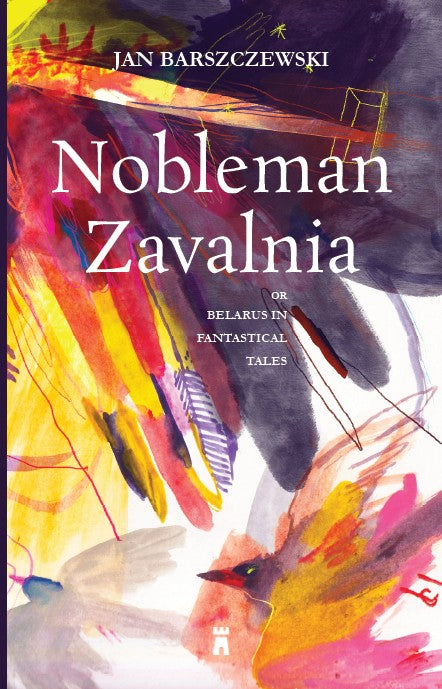
The vaukalak is the werewolf of Belarusian folklore, the local form of the Slavic volkolak: a person who turns into a wolf, either by his own sorcery or because someone has bewitched him. Its most haunting story is in Jan Barszczewski's Nobleman Zavalnia, or Belarus in Fantastical Tales (1844–46): a young peasant, turned into a wolf at his sweetheart's wedding, lives for years in the forest with a human mind. Under the folk tale lies one of the hardest facts of village life in the Russian Empire.
Here is the story, what villagers believed about werewolves, and what the tale was really about. Marka's tale is one of the high points of the illustrated Nobleman Zavalnia, with full-colour pictures by Nasta Lee, and the reason a Belarusian werewolf made our list of 20 Eastern European folk horror books.
Who tells the werewolf tale
Nobleman Zavalnia is a frame tale. In the winter of 1816–17 a country nobleman near Polatsk, in northern Belarus, shelters travellers caught by blizzards, and the price of supper is a story. One stormy night an official, Pan Maragowski, arrives with his coachman Jakush, who has just stopped his master from shooting two wolves by the road. They have human souls, Jakush warned, and whoever kills one will answer for it before God. So after supper the company asks Jakush to tell them about werewolves, and to tell the truth.
The werewolf of Nievel: Marka's story
Near the town of Nievel lived a peasant, Marka, who never smiled and said he was dead to the world. One day he told a neighbour why.
As a young man he loved music, dancing and Alena, the daughter of well-off parents, who loved him too. But Ilya, the master's favourite, wanted her as well: an informer who carried village gossip to the manor and grew rich cheating the estate. The peasants of Barszczewski's Belarus were serfs, bound to a landowner who could decide even whom they married. When Alena's parents turned Ilya away, the master simply ordered her to marry him. Marka said openly that Ilya's fortune was built on theft, and Ilya swore revenge.
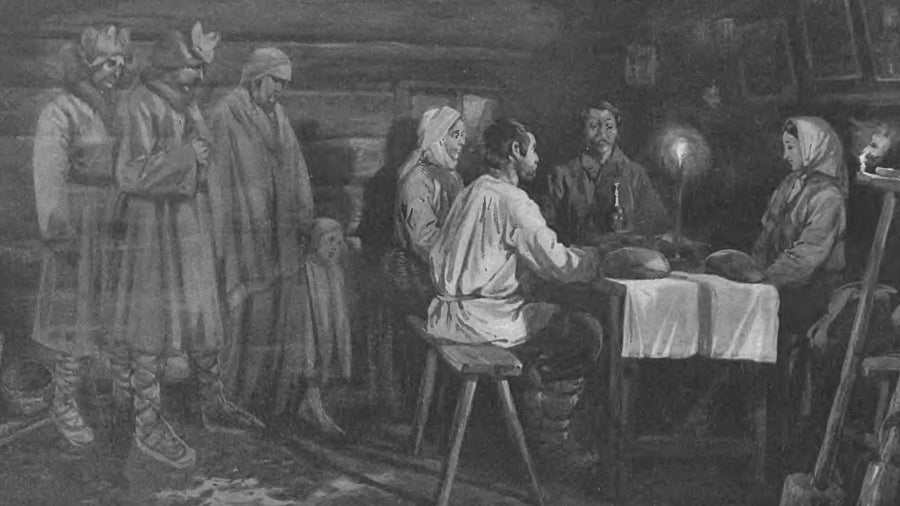
Marka went to the wedding and stood apart. An old bagpiper, Artsiom, poured him harelka, Belarusian vodka, and a stranger nearby smiled and remarked that now he would dance. Soon the guests were staring: his eyes shone like a wolf's. Alena cried out in fright that he must leave. At home his own dog did not know him, and when he tried to speak, only a howl came out. He fled into the forest, and under the fir trees he looked down at a wolf's paws.
"I wandered through mountains and forests in the form of a terrifying beast, but with the mind and heart of a man."
On Sundays he howled at the church bells, praying for mercy, and each morning he howled to greet the rising sun. Over the years misery hardened into hatred. One spring he seized Artsiom's little daughter Hanka from her geese, with the dogs tearing at his flanks, and left her deep in the wilderness. Revenge brought no peace. When he went back for her, she was gone.
Then he heard of the witch Aksinia, who knew how to turn people into beasts and back. Searching for her, he chased a cat that turned into a magpie and led him to a hut swarming with cats. At dusk the cats became girls and danced in the meadow: rusalkas, the spirits of Slavic folklore that take the form of young women. Marka swallowed a little plant with tiny blue blossoms and was a man again until midnight. The next evening one of the girls told him she hated wolves, because a wolf had carried her off from her father's geese and Aksinia had taken her in. It was Hanka. Marka fled, a wolf once more.
In despair, he overheard a priest tell some ploughmen that vengeance lowers men to the level of beasts. From then on the wolf did what good he could, chasing foxes from the geese and warning shepherds of bears. One August he saw Alena reaping rye when a wolf seized her little son from the sheaves. Marka took the boy from its jaws unharmed and carried him back to her.
That night he dreamed of Hanka, dressed in white, among lilies she had planted on her grave and watered with her tears. Then a volat, a giant of Belarusian folklore, led him to a grave at a crossroads, made him dig up a huge skeleton and told him that this would be his body, in which he would lie and weep until he was called to a new life. The giant pushed him in. Marka woke a man, in the clothes he had worn to Alena's wedding.
Werewolf folklore in Belarus: what villagers believed
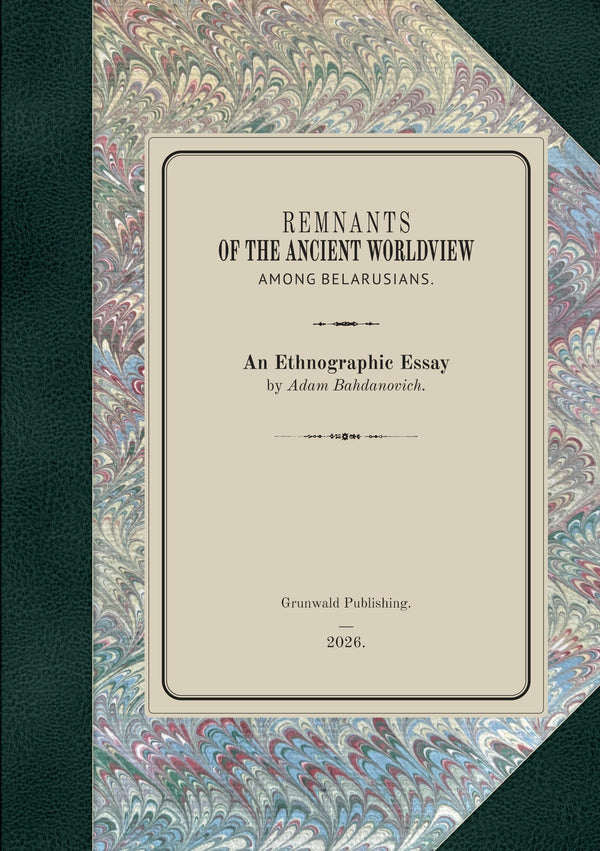
A Belarusian villager would have recognised every step. Adam Bahdanovich's Remnants of the Ancient Worldview among Belarusians: An Ethnographic Essay (1895), translated from the Russian, edited by Olya Ianovskaia, counts the vaukalak among the accomplices of the unholy, the people believed to be in league with the devil-world. A sorcerer-werewolf, he records, turns himself into a wolf by somersaulting three times over a knife stuck in the ground, and if someone pulls the knife out while he is away, he stays a wolf forever. But an ordinary person can also be turned into a wolf by chary, a sorcerer's enchantments. He must live as a beast of prey, but "when dogs are set on him or someone tries to kill him, he weeps human tears."
Nikolai Nikiforovsky, a peasant's son born near Vitebsk in 1845, collected more than two thousand omens and beliefs in Barszczewski's own region. His 1897 collection matches the tale even more closely: a powerful sorcerer turns a whole wedding party into wolves. The werewolves howl toward the east or toward their own villages, and that howling is their prayer. They are changed not for life but for a fixed term, after which each comes home looking just as he did at the moment he was bewitched: Marka in his wedding clothes. Both collectors wrote in Russian, half a century after Barszczewski, and neither mentions him. (Our field guide to Slavic folklore creatures covers the rest of the Belarusian night.)
What the werewolf really meant: taken for a soldier
Mikola Khaustovich, the Belarusian scholar who translated Zavalnia into Belarusian, reads the werewolf as a recruit. The Russian Empire took peasants into the army for terms of up to 25 years, and a landowner could choose which of his serfs to hand over. Read that way, the pieces fall into place: the master's will that cannot be undone, the informer who marks the man who spoke against him, and the young man taken just as his life should begin, who lives for years among people who would gladly kill him and never stops praying to go home.
Nikiforovsky's books carry the same memory. His 1907 book of tales about the unholy describes a grandfather who remembered the dreaded recruiting levies, hid from the recruiters and never lost hope of returning to his family. Vitebsk people also said the cuckoo had once been a woman whose husband was unjustly sent off to be a soldier, leaving her neither a widow nor a wife. The werewolf, like the recruit, was not dead. He was absent.
The forget-me-not cure
One detail has no village source: the little blue flower. Nikiforovsky's Vitebsk cures for a werewolf range from a woollen sash thrown over the wolf to a piece of the wedding loaf, but none of them is a plant. Barszczewski never names it. Khaustovich argues that it is the forget-me-not, niezabudka in Polish, and that naming it would have given the game away: Niezabudka was the title of the almanac Barszczewski published in St Petersburg in the early 1840s. To become human again, Marka has to remember.
The village cure works the same way. A fiddler plays the wedding songs, and "as soon as the fiddler reaches the place in the song where the spell overtook them, the werewolves howl for joy and become people." In the tale, a musician at the wedding helped cast the spell. In the village, a musician could lift it, by taking the wolves back to the moment they were lost. The cure for a stolen life is memory.
Why Nobleman Zavalnia matters
Werewolves return in the tale of the White Magpie, a witch in the shape of a snow-white bird, and Aksinia has plenty of relatives in our guide to Slavic witches, sorcerers and healers. Barszczewski's werewolf is no monster waiting for a silver bullet. He is a young man taken from his village. The book's tales are told as true, they keep returning to loss, and under their folklore runs the history of a country that had lost its state. Ours is the first complete English translation, and the premium edition is a hardcover illustrated in full colour by Nasta Lee.