Leshy (Lesavik): The Forest Spirit in Belarusian Belief
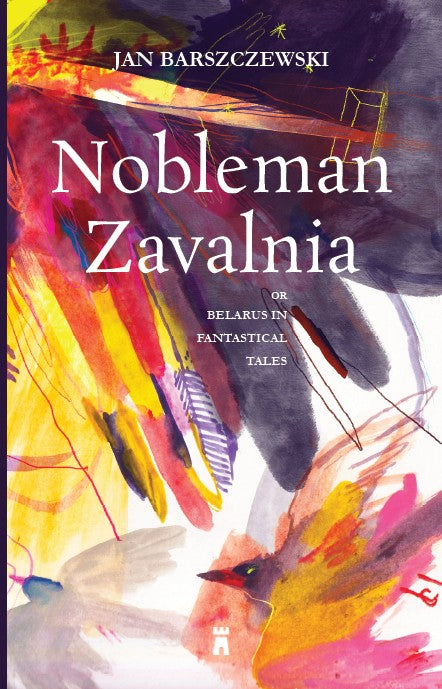
The leshy, the Slavic forest spirit, as Belarusian villagers described him to Adam Bahdanovich, and the tale from Nobleman Zavalnia of a young man who threw a stone at one and paid for it.
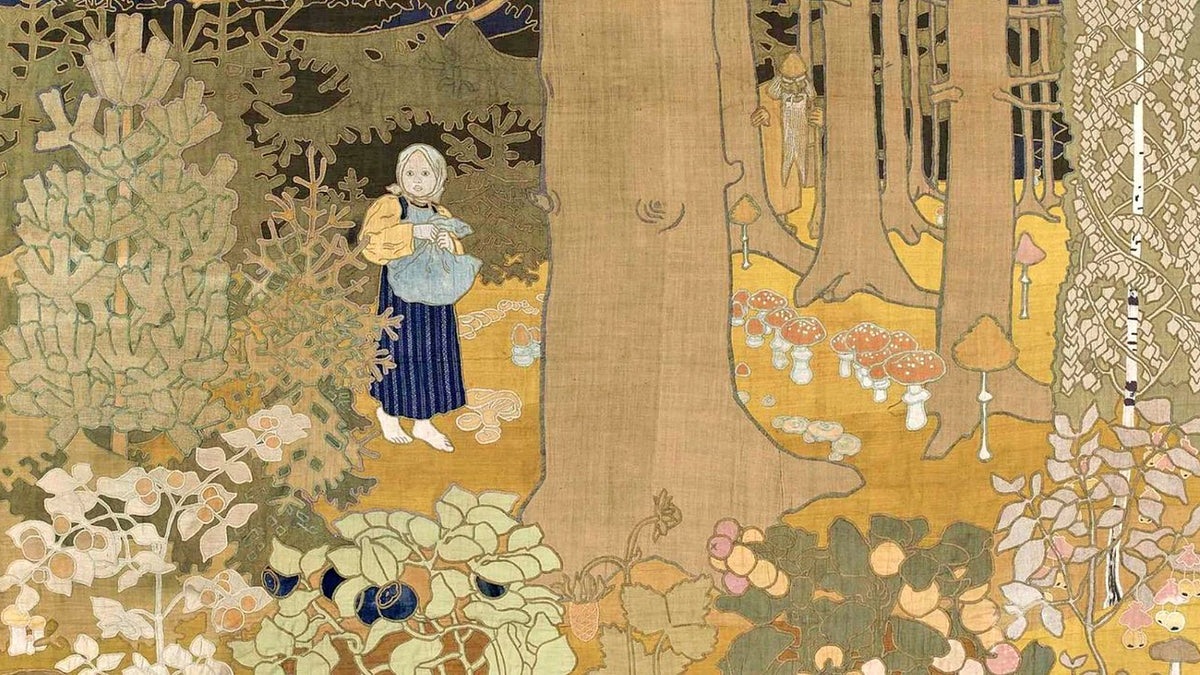
In this post
The leshy is the forest spirit of Slavic belief: the master of the woods and of every beast and bird in them. Belarusians also called him the lesavik. Villagers described him as a giant who stands as tall as the pines or shrinks into the grass, wears wolf and bear skins, and drives herds of animals before him. He can do harm, but he need not; it depends on how you treat his forest.
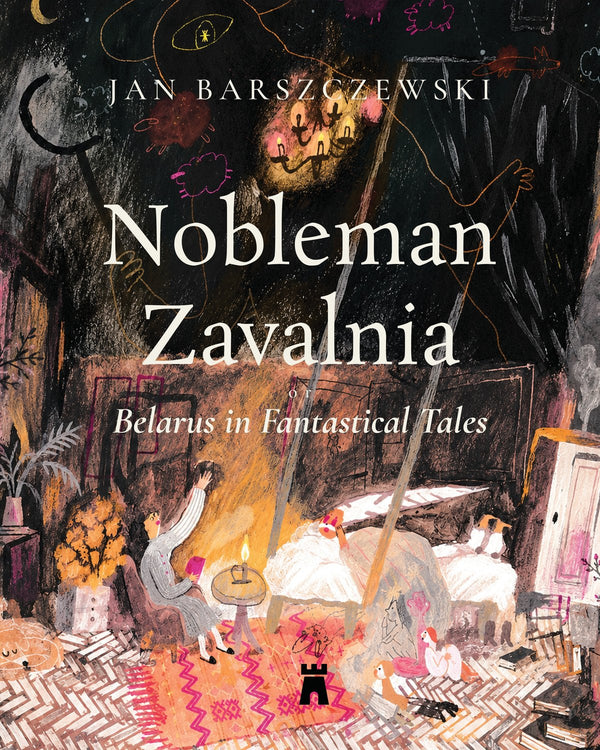
The fullest picture of him comes from Adam Bahdanovich's Remnants of the Ancient Worldview among Belarusians (1895), a record of Belarusian village belief now in English for the first time. Half a century earlier, Jan Barszczewski put the same spirit, under the name liasun, into one of the darkest tales of Nobleman Zavalnia (1846). Read side by side, the two books tell one story. For the leshy's neighbours, from the house spirit to the werewolf, see our field guide to Slavic folklore creatures.
What is a leshy?
Bahdanovich had no doubt which spirit ruled the Belarusian imagination:
This seems to be the most majestic image the Belarusian imagination has created.
Apart from thunderstorms, he explains, nothing in the Belarusian landscape was as mysterious as the dense old forests, with the cracking, groaning and wild laughter that fill them in a storm. Out of those sounds villagers made the leshy.
The leshy is as tall as the trees of whatever forest he walks in, and he grows or shrinks to match them. When he runs riot in a storm he tears oaks out by the roots and snaps centuries-old pines, scattering the trunks behind him so that no one can follow his tracks home.
What does the leshy look like?
His head is covered in long curls, so that it looks like the crown of a pine. He wears wolf and bear skins with the fur turned outward. His arms and legs are as thick as oak trunks, and his eyes burn like a wolf's or an owl's. Herds of beasts and flocks of birds travel with him, especially owls, ravens and magpies.
He neighs and guffaws when he is merry, howls like a wolf when he is sad and growls like a bear when he is angry. When he claps his hands, the crack rings through the forest.
Where does the leshy live?
In the matochnik, the heart of the pushcha (the primeval forest), ringed by fallen timber and by sucking bogs that never freeze. There he lives with his beasts and birds, and there all the large animals go to die, because only they know the paths in.
The giant leshy lives only in the great forests, and meeting him is very dangerous. A small wood has a smaller leshy, but even he can give a man a bad fright and set wolves on him.
Is the leshy good or evil?
Bahdanovich counts the leshy among the unholy, the whole crowd of devils, witches, werewolves and spirits that still filled the peasant's world. But he draws a line inside that crowd. The leshy and the water spirit, neighbour of the rusalki, can do evil but need not; the devil cannot help it, because evil is his nature. The leshy is less a demon than a powerful neighbour.
Foresters, who worked in his domain, had to keep him content or he might send a beast to maul them. On Annunciation Day a forester who knew the right words went to the edge of the forest with bread and salt, a few of his own hairs pressed into the bread. Facing east, he circled it around his head and recited a charm in which the hungry beasts of winter demand a sheep's head or a man's. Then he cried three times, “Let my hair be enough!”, and flung the bread far off to one side: a small part of himself in place of the whole.
The liasun in Nobleman Zavalnia: "Daring Deeds"
Barszczewski grew up near Polatsk in northern Belarus. In the illustrated Nobleman Zavalnia, a country nobleman, Pan Zavalnia (Pan is a gentleman's title, roughly "Mr"), shelters snowbound travellers at his manor in the winter of 1816–17 and asks each guest for a story. The second tale, told by a peasant traveller, is about a young man who picked a fight with the forest.
Vasyl, a foundling spoiled by the childless peasant who raised him, grew up lazy and quarrelsome. One hot summer day the village was mowing hay for the landlord as corvée, the unpaid labour serfs owed their master. During the midday rest someone shouted from the edge of the grove. A liasun was walking through the trees, his head above the pines. Ahead of him poured squirrels and hares; over them flew black grouse and partridges. In the meadow he shrank to the size of a dwarf.
Vasyl marched up and hit the spirit with a stone. The liasun gave a cry so loud that the leaves fell from the trees, rose like a giant black bird and vanished behind the forest. Vasyl laughed: that would teach the demon not to drive their birds and beasts out of their woods. An older man warned him that such recklessness brings fire to the forests, disease to the cattle and punishment to the one who does it.
The whirlwind, the witch's daughter and the fire
Later a whirlwind spun across the field, and Vasyl ran into its path and greeted it as his brother. A hand black as coal reached out of the dust. Bahdanovich's villagers did the opposite: they fled a whirlwind, because its spirit, the podvei, can twist a man's head or cripple his limbs.
Vasyl married Aliuta, the daughter of a widow the village called a witch, said to steal milk and fly about as a magpie (more on such women in Slavic witches, sorcerers and healers). Then the losses began. Whenever a wolf took a ram from the village herd, it was Vasyl's. When a fox got into the geese, they were his geese. One of his cows drowned in a swamp. At last a fire swept through the forest, a spark landed on his granary, and his grain burned. The villagers called it the liasun's revenge.
Ruined, Vasyl took to drink. One night he boasted in the tavern that he would sit on the Serpent's Stone, a haunted boulder where treasure was said to lie, and bow to the demons for money. He walked out into the dark and never came back. Some said the liasun had lured him deep into the woods, and mushroom pickers swore they had heard his voice among the trees, and the spirit's laughter. Aliuta stayed on at the manor, neither wife nor widow.
Two records of one belief
Bahdanovich never mentions Barszczewski. He wrote in Russian, half a century later, chiefly from central Belarus. Yet the tale follows his record point by point. His leshy grows and shrinks with the trees; the liasun walks taller than the pines and shrinks to a dwarf. His leshy travels with herds of beasts and flocks of birds, and can set wolves on a man who offends him. Vasyl is the man whose ram the wolf always takes.
Barszczewski supplied one more key himself. In the sketch of northern Belarus at the front of his book, he writes that people had seen the forest god moving great flocks of squirrels from one forest to another:
he was saving them from fire, having foreseen where the blaze would break out.
With that line in mind, the meadow scene changes. By local belief, a forest spirit moving the animals was leading them away from a fire he could see coming. Vasyl took him for a thief of the village's game and threw his stone at a rescuer. The tale never says whether the fire that later takes Vasyl's grain is revenge, or simply the fire the spirit foresaw.
A warning about leaving home
Pan Zavalnia sums up Vasyl's sins: he quarrelled with the liasun, chased cursed treasure and called the whirlwind his brother. His nephew Janka, the narrator, a former Jesuit-school pupil back after years away, asks what the harm is. On a stormy night, he says, he might tell the wind to fly north and add that he may follow it soon. His uncle answers that the common folk say the whirlwind is the devil racing through the fields.
The Belarusian scholar Mikola Khaustovich, who translated the book into Belarusian, reads this exchange as a warning that to leave one's land and serve in the north is a sin. The north meant St Petersburg, the imperial capital, where Barszczewski was living when he wrote the book, and Janka is the author's stand-in. Under a village tale about a reckless young man runs a quieter one about a writer who followed the wind north.