Inside The Belarusian Cookbook: What's in It and Where to Start
What's inside Aliaksandr Biely's The Belarusian Cookbook: the chapters, ten dishes to start with, how it relates to Polish and Lithuanian cooking, and answers to common questions.
In this post
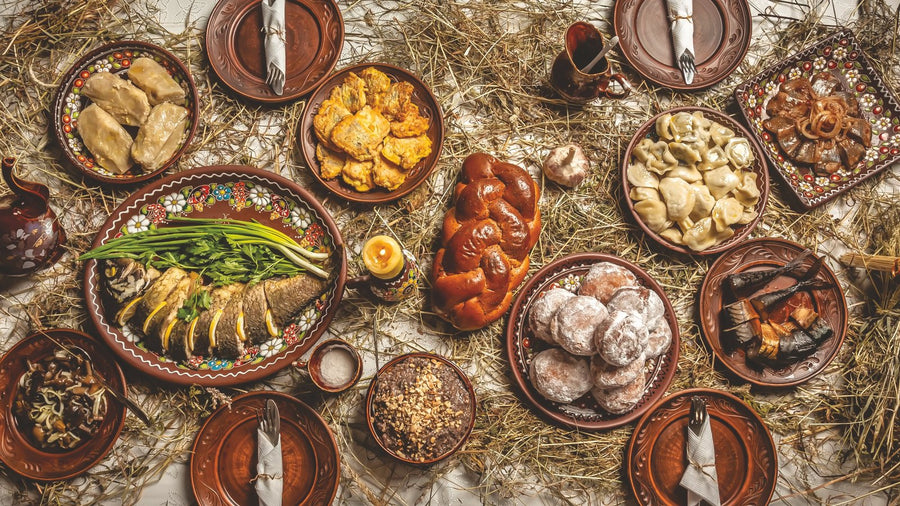
The Belarusian Cookbook by Aliaksandr Biely is a 408-page hardcover of more than 200 traditional recipes, from peasant soups and potato pancakes to the banquet dishes of the Radziwills, each set in its history. It is part cookbook, part cultural history, and many of its recipes appear in English for the first time.
Here is what is inside the book, where to start cooking, and answers to the questions readers ask most. For a tour of the cuisine itself, see our guide to Belarusian food: 25 traditional dishes and the stories behind them.
What's in the book?
Biely draws on oral tradition, ethnographic records and rare historical cookbooks, among them Wincenta Zawadzka's 19th-century Kucharka litewska, and adapts every recipe for today's kitchen. The chapters:
- Staples of Belarusian cuisine: the bread, dairy, grains and spices behind it all
- Appetizers: salads, stuffed eggs, herring and forshmak
- Soups: krupnik, khaladnik, cabbage soups, borshch and milk soups
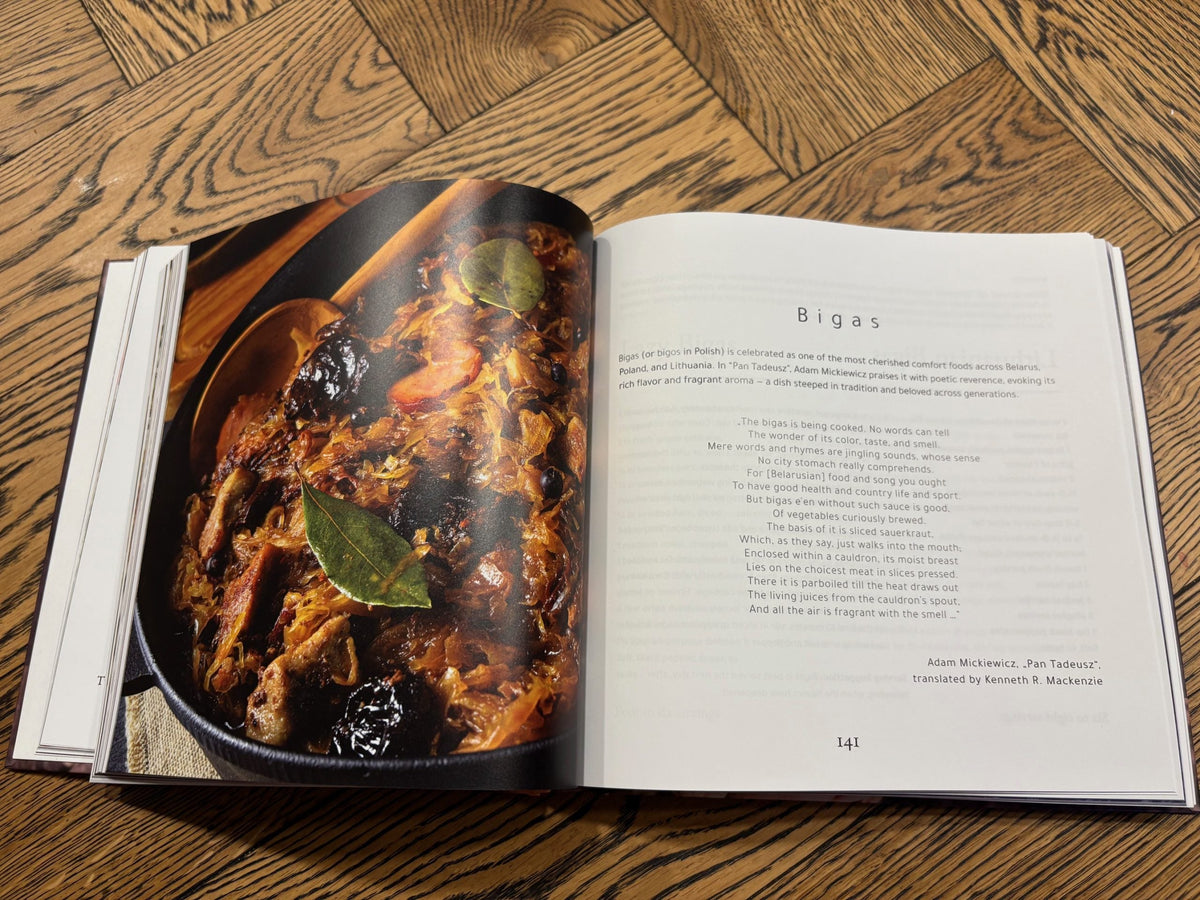
- Meats: zrazy, goulash, halubtsy, bigas and kishka
- Poultry: duck with apples, goose stuffed with kasha
- Fish: stuffed carp, pike, smelt and vendace
- Pancakes, fritters and dumplings: bliny, draniki, syrniki and kalduny
- Breads: knishes, kuliabiaka and lazanki
- Grains and legumes: kasha and kuttsia
- Vegetables: potato babka, tzimmes and meatless cabbage rolls
- Mushrooms: king boletes and saffron milk caps
- Sauces, toppings and dips: horseradish and plum sauces, and machanka
- Desserts: honey cake, karavay wedding bread and Easter babka
- Beverages: kisiel, kvass and fermented birch sap
- Holiday menus: Kaliady (Christmas) and Vialikdzien (Easter), followed by a glossary and an index
Ten dishes to start with
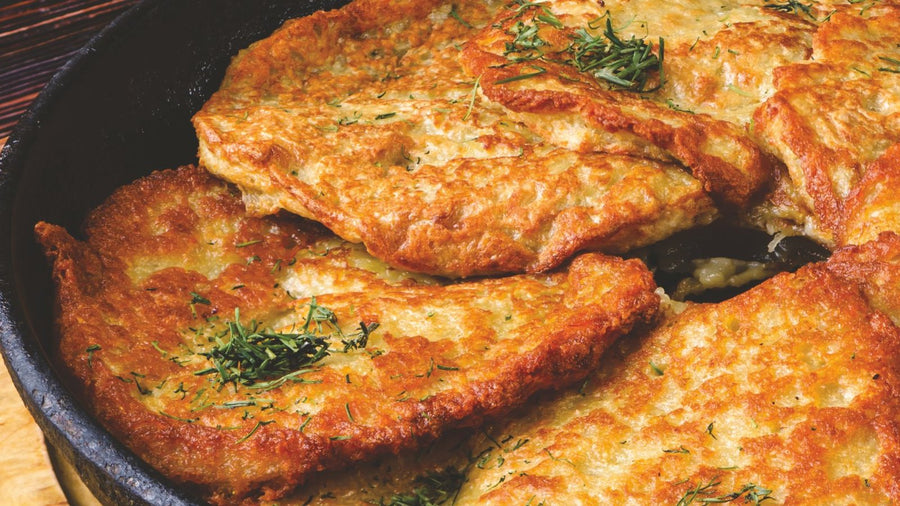
- Draniki: four kinds of potato pancake, from plain to stuffed. Our guide to draniki has a basic recipe and what to serve with them.
- Machanka (vierashchaka): the meat-and-gravy dip for pancakes, from peasant pot to royal kitchen.
- Kalduny: three doughs and eight filled dumplings, from Tatar beef and mutton to Lenten mushroom.
- Cepelinai: pork-filled potato dumplings from Lithuania and northwest Belarus.
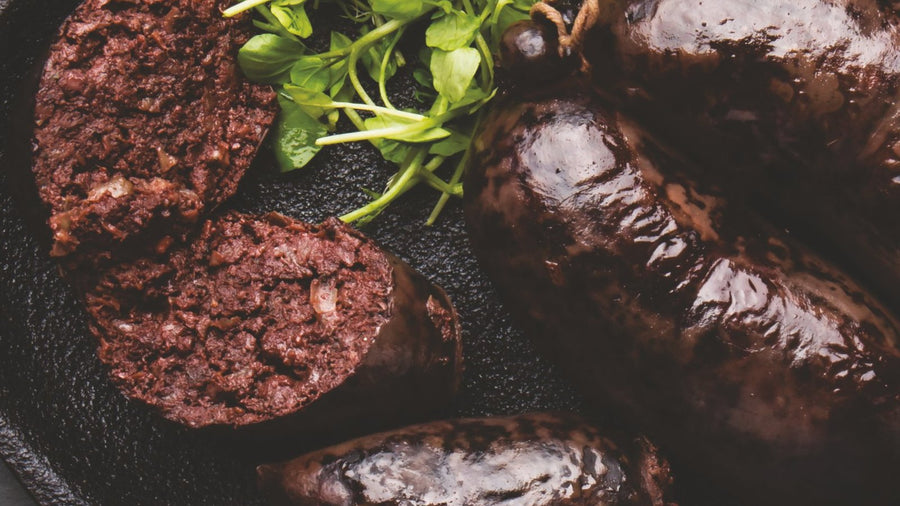
- Kishka: potato sausage two ways, one with a kosher variation, and the story of the older blood sausage. Read more in Kishka explained.
- Syrniki: cottage cheese fritters, crisp outside and creamy within.
- Halubtsy: cabbage rolls with beef and rice, plus meatless versions.
- Borshch with beet kvass: the gentry's sour borshch, with the kvass made from scratch.
- Khaladnik: five chilled summer soups of beets and sorrel.
- Kuttsia: the Christmas Eve grain dish, plain or with poppy seeds and honey. It anchors the Belarusian Christmas Eve supper.
Who is it for?
For cooks who want to understand what they're cooking, and for readers who want to know a country through its food:
- Cooks with Belarusian, Polish, Lithuanian or Jewish roots, looking for the dishes their families made.
- Anyone curious about Eastern European food who wants the history as well as the method.
- Gift-givers: a 408-page, 8 × 8 in hardcover with holiday menus for Christmas and Easter.
Belarusian food and its neighbours
This is a Belarusian cookbook, not a Polish one, but Polish, Lithuanian and Jewish cooks will find much that is familiar. For more than two centuries the lands of today's Belarus, Lithuania and Poland formed one state, the Polish-Lithuanian Commonwealth, and Jewish and Tatar communities lived alongside them. So you'll find bigas (bigos in Polish), lazanki, potato babka and Christmas Eve stuffed carp here, as well as knishes, tzimmes and Tatar noodle soup. As the author puts it, these dishes are not foreign but tuteishyya: "local and familiar."
Questions readers ask
Is this Belarusian food or Polish food?
Belarusian. Because Belarus shared a state with Poland and Lithuania for centuries, many dishes have Polish or Lithuanian cousins: bigas is the Belarusian bigos, and potato babka is also made in eastern Poland and, as kugelis, in Lithuania. Recipes of Lithuanian, Jewish or Tatar origin are labelled as such, and the introduction explains how they became part of Belarusian cooking.
Are the measurements in cups or metric?
US kitchen measures throughout: cups and spoons, pounds and ounces, and oven temperatures in Fahrenheit. There are no metric conversions. Historical ingredients that are hard to find today have been replaced with ones you can buy, and some recipes suggest swaps, such as spinach with a little lemon juice for sorrel.
Are there vegetarian recipes?
There is no separate vegetarian chapter, but many dishes are meatless: the whole Mushrooms chapter, syrniki and most of the pancakes, a Jewish vegetarian krupnik, kalduny with a Lenten filling, vegetarian patties and three meatless cabbage rolls. Many use eggs or dairy, and some vegetable dishes include ham or salt pork, so check each ingredient list.
Is it a good gift?
For anyone who cooks or loves food history, yes. It is a 408-page hardcover, 8 × 8 inches, with 50+ photographs, essays on the history behind the dishes, and menus for Kaliady (Christmas) and Vialikdzien (Easter).
Is there an e-book?
An EPUB edition is coming. For now, The Belarusian Cookbook is available in hardcover only.